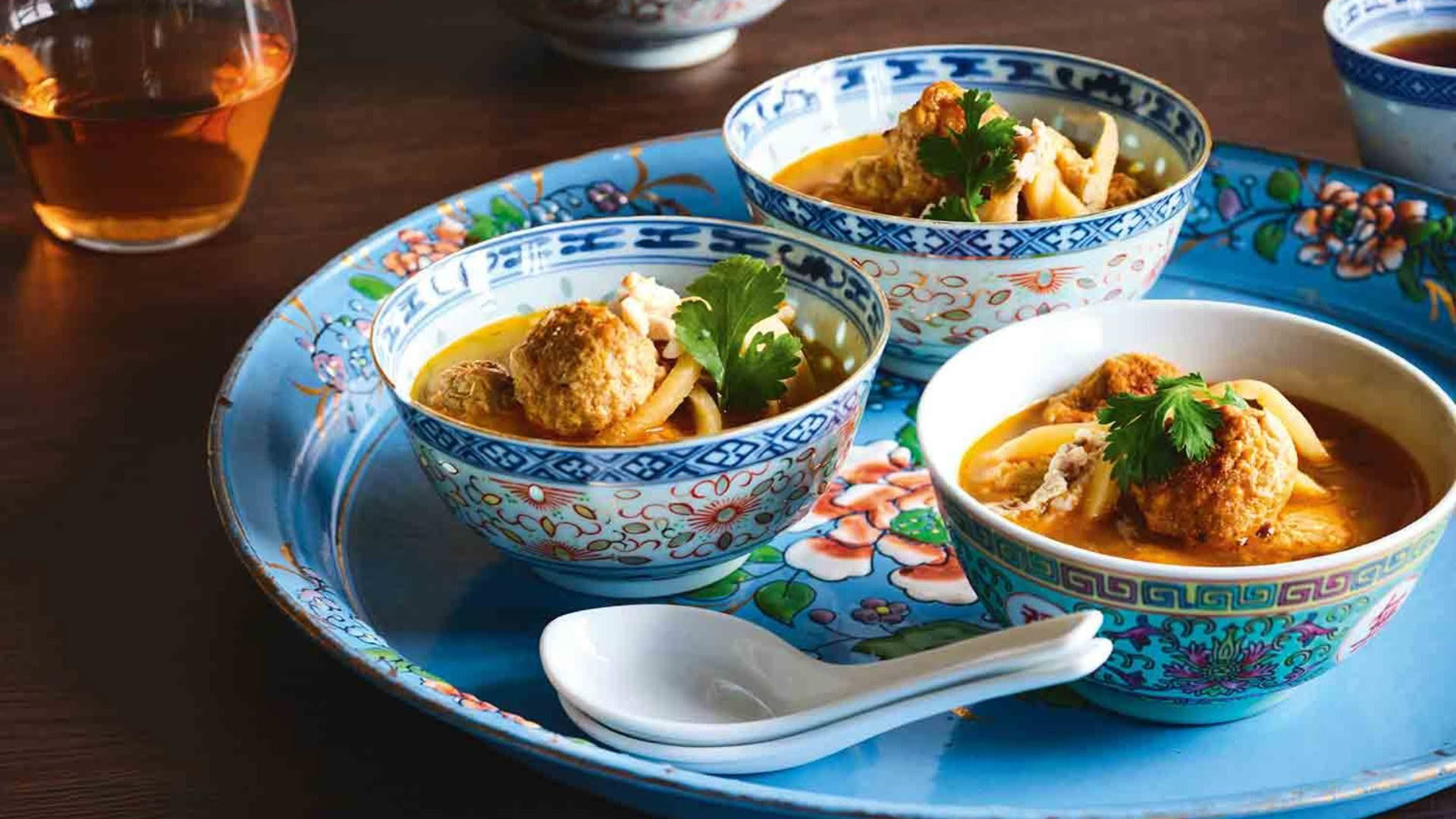
In 1976, Columba College boarding house in Dunedin didn’t serve much rice. For Connie, newly arrived from Singapore, this was a problem. “I go about two days without eating rice and I’m dying,” she says. Following her nose, the smells of garlic and spices led her to the top-floor flat of her Indian dorm mother, Miss Naidu, who opened her kitchen to Connie so she could prepare the food she missed – the Peranakan dishes of Singapore. While rice was common to them both, side by side they each prepared their own style of curry. “That’s what stopped me missing home and I made a friend,” says Connie.
As a fifth-generation Peranakan, Connie was mirroring the migratory origins of this rich culture, created in the early 1800s when mainland Chinese men travelled to Malacca, Penang and Singapore to trade. Marrying Malay women, they established wealthy households staffed with maids, cooks and nannies (amahs), in which the wives – the Nonya – spent their days in leisure planning meals for their men – the Baba. Connie explains, “The resulting food is quite extraordinary. It’s a blend of Chinese and Malay food, and a bit of Indian cuisine, so you can see the cultures blending. And because they had all this time, all this help and all this money, the food became very luxurious and exceedingly complicated.”
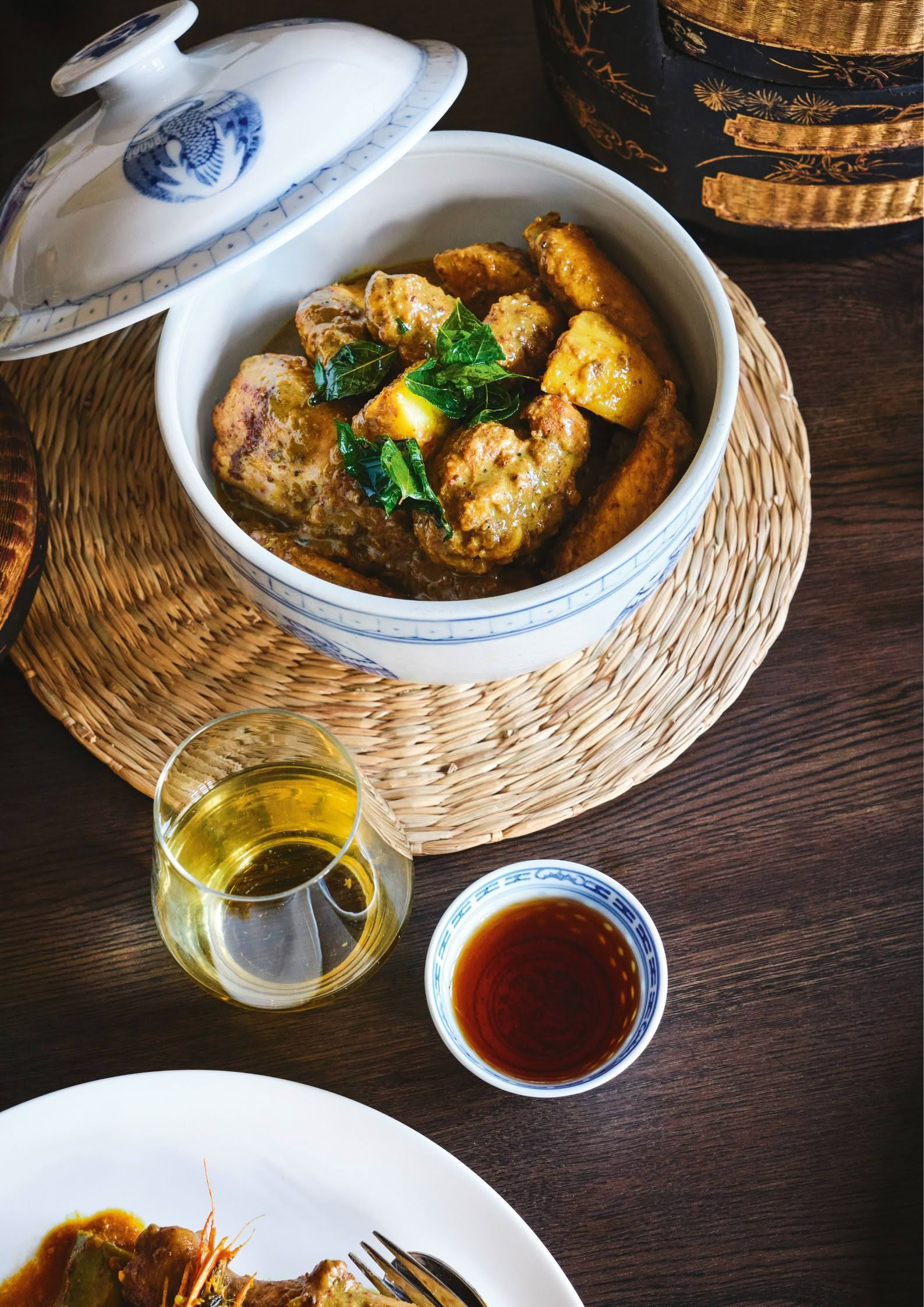
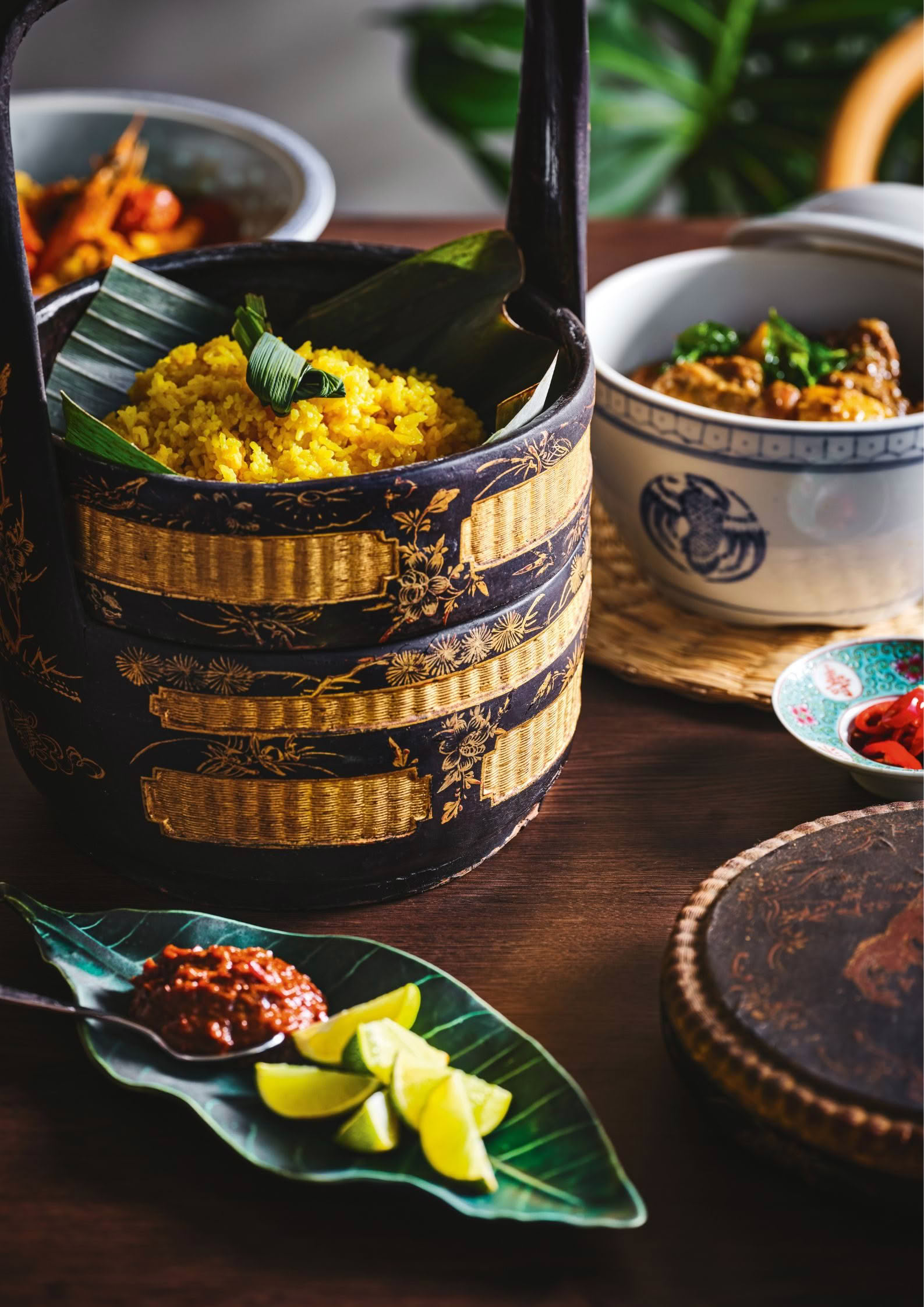
The foundations of Peranakan cuisine – also known as Nonya or Nyona cuisine – are curry, coconut cream, tamarind, lime (especially limau purut or makrut limes), lemongrass, chilli, ginger and garlic, pandan leaves and coriander. “It’s sweet. It’s savoury. It’s hot. It’s spicy. There’s a lot of use of turmeric. There’s a lot of use of tamarind, so it’s that beautiful sour taste. And it’s also very textured,” she says. “When people eat it, they go, ‘Amazing’. But how do you get to amazing? You just have to do the mahi.”
But in today’s busy lives, how can such food live on? Connie is enthusiastic about the Singapore government’s support for the hawker markets, which have helped cement Singapore’s reputation for great food. Indeed, hawker culture in Singapore was successfully inscribed as the country’s first element on the UNESCO Representative List of the Intangible Cultural Heritage of Humanity in 2020. These markets offer a unique combination of food, space and community. “For a long time in Singapore we found the Peranakan food losing its momentum. With the hawker centres getting their profiles up, the younger generation especially have come to understand how precious it is to actually preserve something like this.”
With an early career as a restaurateur – including owning the French Café in the 1990s – and having spent more than a decade in Auckland’s urban regeneration landscape developing the North Wharf strip in Auckland’s Wynyard Quarter and establishing Queens Wharf, The Cloud and Shed 10 as key waterfront venues, it’s clear that Connie knows the value of food culture and recognises its worth to the economy.
These days she shares her wealth of knowledge as manager of food incubator The Kitchen Project (TKP), which coaches entrepreneurs to turn their food-business dreams into reality. Many TKP graduates are migrants, which takes Connie right back to those days in Dunedin. “I think a lot of migrants use food as a way to connect. Being an immigrant woman myself I completely understand how migrant communities use food to remind them of home and help them not to lose memories. Secondly, it helps them to make friends because you can eat together. And then thirdly, it preserves their culture.” thekitchenproject.co.nz TRACY WHITMEY
SEE MORE FROM CUISINE