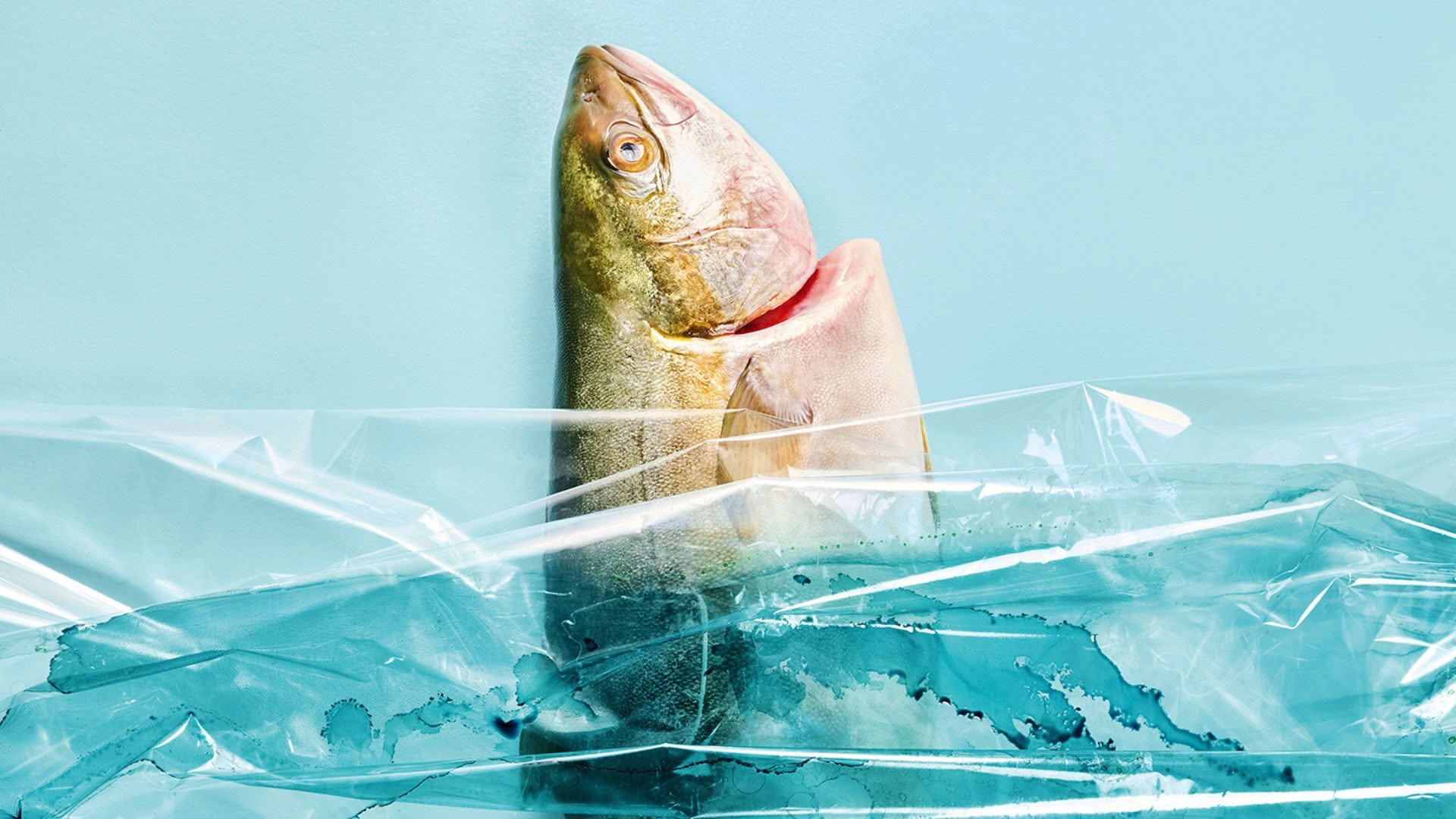
There’s something unmistakably Antipodean about kingfish. Sleek, muscular with a flash of gold down the flank, it’s the kind of fish that looks like it has been engineered rather than evolved. Even the name has swagger – you hear ‘kingfish’ and picture long ocean swells, a bent rod, the sort of grin that only comes from catching something that could just as easily pull you overboard.
For many Kiwis, yellowtail kingfish is summer. It’s Jimmy Buffett on the playlist, bach kitchens, bare feet on hot decks, the smell of sunscreen and salt drying on your shoulders. It’s the fishing story that grows longer every time it’s told. And if you’re very lucky, it’s the sashimi sliced on the spot, still quivering with life, eaten off the knife with soy, wasabi and bravado.
Wild kingfish has always had the allure of the beauty of the fish themselves, their sheer power and the prestige of the catch. They’re not easy: they’re sprinting athletes, patrolling reefs, pins and headlands, taking off like missiles the moment you hook them. They fight with intelligence. They fight with intent. And when you win, you learn a kind of humility in the doing.
But what’s changed in the last decade is how many New Zealand chefs have fallen in love not just with wild kingfish, but with its farmed cousin, Haku kingfish, raised in Northland by NIWA in a land-based facility that feels more science museum than fish farm. In the world of aquaculture, it’s as far from the old stereotypes as you can get. With clean water, clean feed, meticulously handled fish, no nets, no escapes, no accidental bycatch, there’s an elegant, controlled environment producing near- perfect fish with astonishing accuracy.
Wild and farmed are two sides of the same gold coin.
What chefs adore about Haku is its predictability. Wild fish are glorious, but moody. One day the fat content is high, the flesh almost creamy. Another day the same fish, the same size, from the same reef, eats lean and taut because of currents, feed, season, stress – a thousand things. That’s the beauty of it, of course, but it’s also the challenge.
Farmed kingfish, when done right, eliminates the variables. A fillet is a fillet is a fillet is a fillet. The fat content is steady, the texture firm yet buttery, the flavour clean and sweet, no muddiness, no surprises. For anyone who wants to age, cure, smoke, grill or slice raw, that reliability is gold.
But don’t mistake reliability for blandness. Good farmed kingfish has character, it has richness, with a quiet kind of oceanic depth and a silkiness that begs to be served cool and precise. You work with it the way you’d work with wagyu, or a beautifully grown tomato – you showcase, you don’t smother.
When you cook kingfish, you quickly realise it doesn’t want to be bossed around. Heat it too aggressively and it tightens like a startled horse. Treat it with respect and it rewards you with texture that sits somewhere between scallop and tuna, with a hint of sweetness that leans into summer like it was made for it.
And then, of course, there is the issue of sustainability, that complicated, ever-moving puzzle. Wild yellowtail stocks in New Zealand waters are carefully managed, and though they are not as abundant as kahawai or trevally (both ideal substitutions), they’re by no means precious. Responsible recreational catch and quota systems help keep them that way.
Farmed Haku is the insurance policy. Beautifully raised, environmentally elegant and a genuine local success story, it leaves the wild fish where they belong and gives chefs a stable supply they can menu with confidence. It’s the sort of aquaculture model we should be proud of – smart, contained, ethical and always aiming for improvement.
And in this summer issue, let’s talk about how we like our kingfish best: raw, cured, aged, lightly smoked or grilled over a whisper of coals.
Kingfish is a hot-day fish. It likes citrus, herbs, clean oils, cold plates, sharp knives and being the centre of attention. It plays beautifully with chilli, ginger, shiso and makrut lime. It can stand up to spice yet shine with restraint. Give it a bit of salt, a little time and it becomes transcendent.
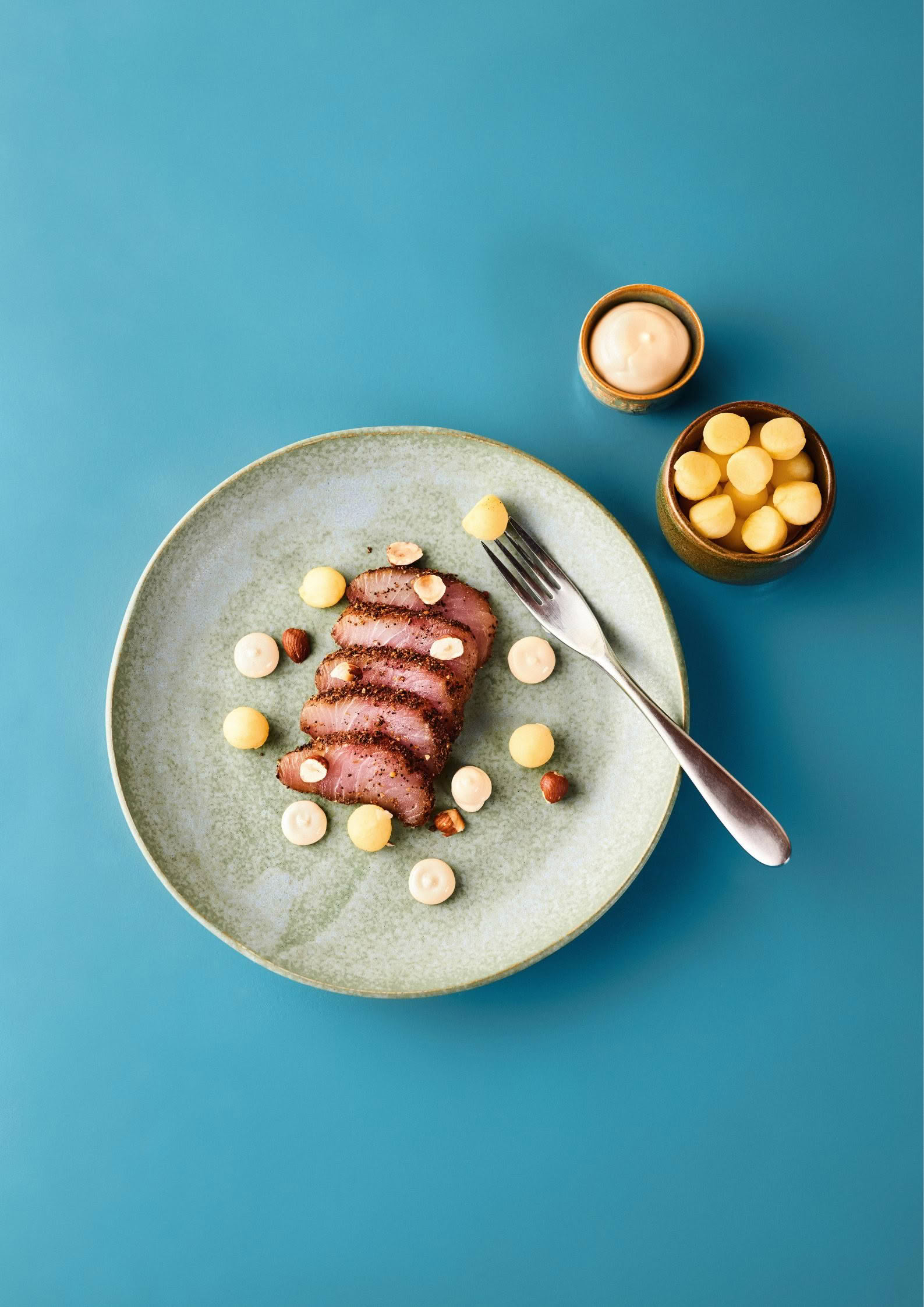
For this issue, I’m looking backwards as much as forwards. My recipe plays with memory, the years of slicing it raw, of experimenting with smoke and salt in my small kitchen at the edge of the sea. This dish, a coffee-cured pastrami of kingfish, is a nod to tradition filtered through a distinctly New Zealand lens. Kingfish takes wonderfully to curing; its firm flesh holds shape and structure, its natural sweetness is amplified by time and technique. It’s not quite deli, not quite sashimi, more a conversation between the two. A meeting of smoke, spice, salt and summer.
Whether you are team wild or team Haku, or happily both, kingfish is one of the greatest gifts of our waters. It’s abundant enough to trust, special enough to celebrate, versatile enough to make you reach for another plate. And at this time of the year, when the days stretch long and the sea feels like an invitation, there’s nothing better to put in the centre of the table.
SEE MORE FROM CUISINE