
Ingredients
| 1.6-1.8kg bone-in, skin-on chicken parts | |
| 1 teaspoon ground turmeric | |
| 6 tablespoons olive oil | |
| salt and freshly ground black pepper | |
| 120ml white wine vinegar or 90ml white distilled vinegar | |
| 1½ cups Castelvetrano or other mild, green olives, crushed and pitted | |
| 2 garlic cloves, finely grated | |
| 1 handful of parsley, tender leaves and stems, chopped |
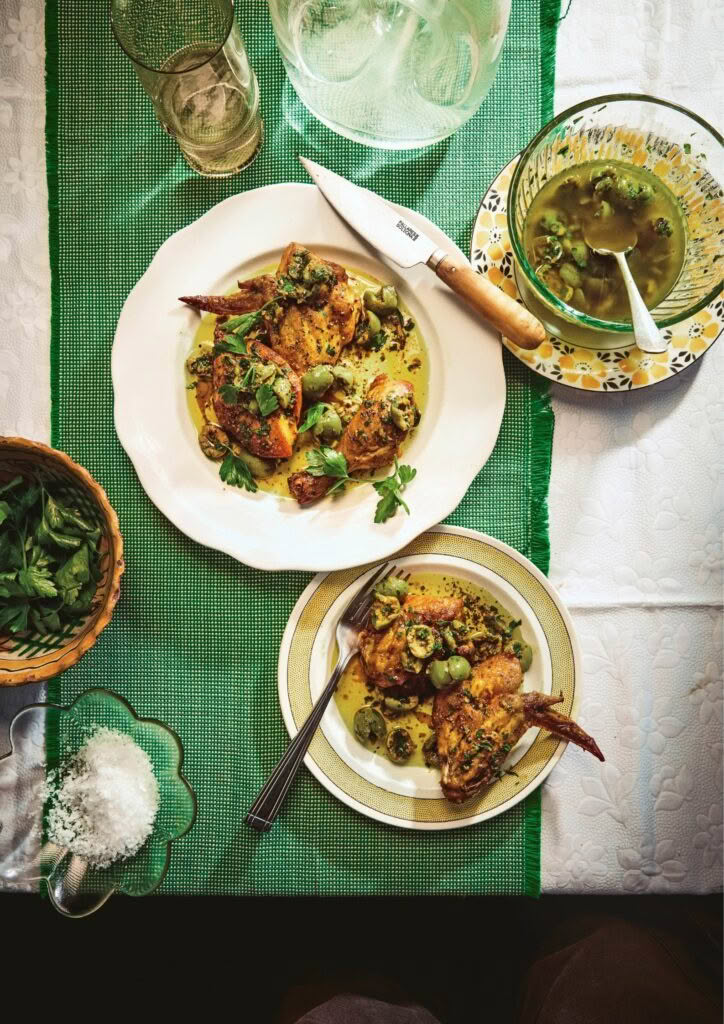
This chicken has far too few ingredients to be as complexly flavoured as it is, but that is the magic of vinegar, crushed briny olives, fresh garlic and lots of chicken fat. Given how simple this whole thing is (classic ‘roasting tray dinner’), my one plea is to really roast your chicken until it’s deeply browned – the success of this recipe depends on it. I know that may seem obvious, but different ovens function differently, so I want you to ask yourself before removing the chicken: ‘Could this chicken be browner?’ If you hedge even a little, the answer might be yes. Keep roasting. Colour equals flavour, which is why this (maybe very scary) recipe asks you to turn your oven to 230°C, pushing at least one person reading this beyond their comfort zone. But the result when cooking chicken this way is browned skin, juicy meat and fantastically golden, schmaltzy bits left behind, which get deglazed with garlic, crushed olives and a bit of water for dressing your chicken. A true pan sauce, done in a roasting tray, all tangy and stained with turmeric, good enough to drink.
View the recipe collection here
Instructions
| 1. | Preheat the oven to 230°C. |
| 2. | Place the chicken on a roasting tray, toss with the turmeric and 2 tablespoons of the olive oil, and season with salt and pepper. |
| 3. | Make sure the chicken is in one layer, skin-side up, then pour the vinegar over and around the chicken and place the tray in the oven. |
| 4. | Bake the chicken, without flipping, until it’s cooked through and deeply browned all over, 25-30 minutes. |
| 5. | Meanwhile, combine the olives, garlic, parsley, the remaining 4 tablespoons olive oil and 2 tablespoons water in a small bowl; season with salt and pepper. |
| 6. | Once the chicken is cooked, remove the roasting tray from the oven and transfer the chicken to a large serving platter, leaving behind any of the juices and bits stuck to the tray. |
| 7. | Make sure the tray is on a sturdy surface (the stovetop, a counter), then pour the olive mixture into it. |
| 8. | Using a spatula or wooden spoon, gently scrape up all the bits the chicken left behind, letting the olive mixture mingle with the rendered fat and get increasingly saucy. |
| 9. | Pour the olive mixture over the chicken, then serve. |
 This is an edited
extract from
Something from
Nothing by Alison
Roman, published
by Quadrille.
Photography by
Chris Bernabeo.