
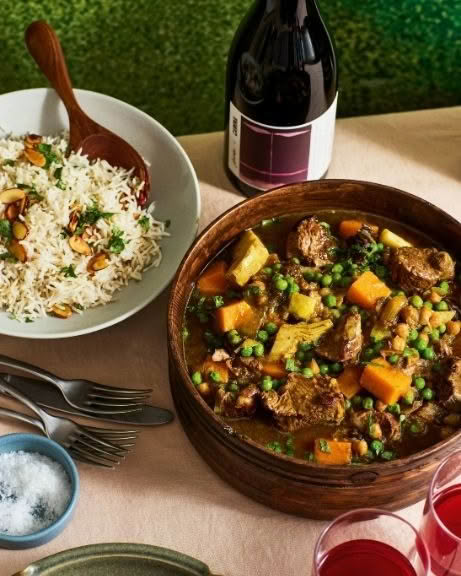
Ingredients
| 2 tablespoons olive oil | |
| 800g lamb, diced in 5cm cubes (use a stewing cut such as shoulder, see NOTE)) | |
| 2 onions, sliced | |
| 2 cloves garlic, sliced | |
| a 3cm-piece of ginger, minced | |
| a good pinch of saffron | |
| ½ teaspoon turmeric | |
| 1 cinnamon stick | |
| 1 teaspoon ground cumin | |
| 1 teaspoon ground coriander | |
| 1 teaspoon salt | |
| 10 pitted prunes, halved | |
| 1 x 400g can chickpeas, drained, rinsed | |
| 400ml chicken stock | |
| ½ preserved lemon, rind only, thinly sliced | |
| 400g pumpkin or kūmara, cut in a 3cm dice | |
| 1 jar (approx 350g) artichoke quarters, rinsed (or use fresh artichokes, trimmed and cut into quarters) | |
| 300g frozen peas | |
| a good handful of coriander or parsley, chopped | |
| BUTTERED RICE PILAF | |
| 1½ cups basmati rice | |
| 50g butter | |
| 70g sliced almonds (or other nuts) | |
| 2¼ cups water or stock | |
| ½ teaspoon salt |
Slow-cooked lamb tagine or stews are great for stress-free meals and are infinitely adaptable to what pulses and vegetables you have to hand. Don’t omit the prunes as they add a lovely touch of sweetness here. You can add the pumpkin with the lamb at the beginning of the cooking time, but it will break down and thicken the stew. I like to add it nearer the end so it stays in distinct pieces.
View the recipe collection here
Instructions
| 1. | Heat the oven to 160°C. |
| 2. | Heat the oil in a Dutch oven or use a tagine if you have one. |
| 3. | Season the lamb and brown all over. |
| 4. | Set aside. |
| 5. | In the same pan, lower the heat and fry the onion, garlic and ginger until soft, around 10 minutes. |
| 6. | Add the saffron, turmeric, cinnamon, cumin, coriander and salt and fry for a minute. |
| 7. | Add the lamb back to the pan and toss in the mix, then add the prunes, chickpeas, chicken stock and preserved lemon. |
| 8. | Bring up to a simmer, cover with a circle of baking paper, put on the lid and cook for 2 hours. |
| 9. | If it needs a little more stock add it now, along with the pumpkin or kūmara and artichokes and cook for another 30 minutes. |
| 10. | Add the peas and cook for another 5 minutes. |
| 11. | If necessary, spoon off the excess fat. |
| 12. | Stir through the coriander or parsley just before serving with the buttered rice. |
| 13. | BUTTERED RICE PILAF |
| 14. | Rinse the rice a couple of times in cold water so that the water runs clear. |
| 15. | Cover again with water and leave for 30 minutes. |
| 16. | Drain well. |
| 17. | Using the saucepan in which you will cook the rice, add the butter and fry the almonds over a gentle heat until toasted and golden. |
| 18. | Remove with a slotted spoon and set aside. |
| 19. | Add the rice to the pan and toast until it is golden and smells nutty. |
| 20. | Add the stock and salt. |
| 21. | Bring up to a simmer, lower the heat, cover and cook for 18 minutes. |
| 22. | Turn off the heat and leave for 10 minutes. |
| 23. | Fluff up with a fork and stir the nuts through the rice. |
| 24. | If you have a rice cooker, you can follow the recipe until you have toasted the rice. |
| 25. | Then transfer to the rice cooker, add the water and proceed as per recipe. |
| 26. | NOTE Lamb shoulder, neck or belly are ideal to use here. You could use rump but you’ll only need to cook 1 hour before adding the pumpkin or kūmara. |
Recipes & food styling Ginny Grant
Photography Aaron McLean
Styling Jessica Crowe