
Ingredients
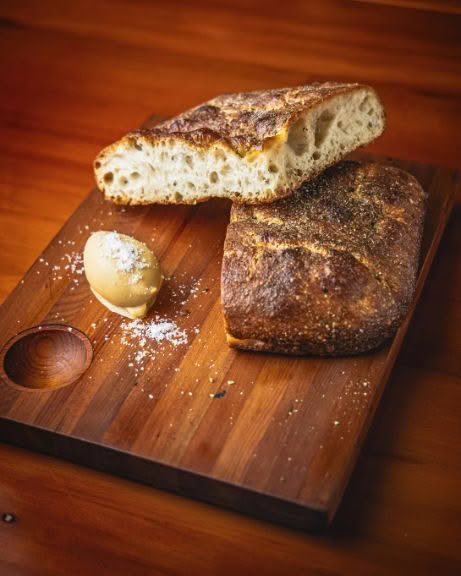
| SOURDOUGH FOCACCIA LOAF | |
| 450ml tepid warm water, at 25°C (for 90% hydration, see NOTE) | |
| 100g wholemeal flour | |
| 400g white bread flour | |
| 100g sourdough starter or mature leaven, ensure it passes the float test | |
| 10g fine sea salt | |
| 50ml pomace olive oil, for baking the loaf | |
| rosemary salt | |
| lemon brown butter, to serve | |
| NOTE I love to make my focaccia dough with 90% hydration, but it works well and is a bit easier to handle with 375ml water which is the more traditional 75% hydration. | |
| ROSEMARY SALT | |
| 1 tablespoon fine sea salt | |
| 2 tablespoons chopped rosemary sprigs, removed from stalk | |
| LEMON BROWN BUTTER | |
| 250g unsalted butter | |
| 1 sprig of rosemary | |
| 50g lemon curd, homemade or shop bought (if buying, choose a brand that is not too sweet) |
If you are just getting into sourdough, focaccia is a great place to start as you are able to achieve consistent results. Whole books have been written about sourdough making (try Tartine Bread by Chad Robertson) and there’s not enough space here to describe everything in detail. For simple demos of the float test, stretch-and-fold techniques and the windowpane test there are many reliable videos on YouTube.
View the recipe collection here
Instructions
| 1. | SOURDOUGH FOCACCIA LOAF |
| 2. | Put the water into a bowl, add the flour and use a mixer with the hook attachment to mix for 2 minutes (hand mixing works just as well). |
| 3. | After 2 minutes, allow the dough to rest for at least 40 minutes. |
| 4. | After 40 minutes add the mature leaven and mix for 7 minutes, then add the salt and mix for a further 3 minutes to form a smooth, silky dough. |
| 5. | Transfer to a container and rest the dough in a warm place for 45 minutes, allowing it to bulk ferment. |
| 6. | Complete 3 to 4 stretch-and-fold steps with 45-minute intervals between. |
| 7. | Once the dough passes the windowpane test, cover the dough with a loose-fitting lid and leave it overnight in the fridge. |
| 8. | Use 3 tablespoons olive oil to rub the base and sides of a baking pan, approximately 30cm x 25cm. |
| 9. | Remove the dough from the fridge, and use oiled hands to gently transfer it to the prepared baking pan. |
| 10. | Leave the dough to temper, uncovered, at room temperature for up to 2 hours depending on the temperature in the room – it should rise by about 50%. |
| 11. | Heat the oven to 220°C. |
| 12. | Once tempered, season the surface of the loaf with more olive oil, a generous dusting of rosemary salt and some freshly cracked black pepper. |
| 13. | Press the pads of your fingers and thumbs into the dough to make deep dimples. |
| 14. | Bake for 40 minutes or until your loaf is dark golden in colour. |
| 15. | Turn the oven off and leave the loaf in the oven for a further 20 minutes with the door slightly ajar. |
| 16. | (Any crispy edges can be broken up and used in the barbecued field mushrooms; see recipe). |
| 17. | Serve with lemon brown butter. |
| 18. | ROSEMARY SALT |
| 19. | Use a mortar and pestle to grind the chopped rosemary and sea salt to a course crumb texture (or use a spice grinder for a finer result if you want to use the rosemary salt as a finishing seasoning). |
| 20. | Transfer the rosemary salt to a small tray or plate lined with a paper towel and allow to dry at room temperature for 2 hours. |
| 21. | LEMON BROWN BUTTER |
| 22. | Cut the butter into large cubes and cook over a high heat until a dark golden foam begins to roll from the outside edge of the saucepan to the surface. |
| 23. | If the foam begins to overflow the pan, gently blow over the butter and the foam level will fall and maybe transfer to a larger pot. |
| 24. | Lower the heat, add the rosemary and continue to cook the butter until the foam is consistently dark golden in colour and the fragrance is toasty and nutty but not burnt. |
| 25. | Strain the brown butter through muslin cloth or a coffee filter into a metal bowl and cool to room temperature. |
| 26. | Combine the soft brown butter and the room-temperature lemon curd with a whisk – it should be smooth and spreadable. |
| 27. | Allow it to cool to firm up a little before serving with a warm chunk of sourdough bread. |
| 28. | You can store the lemon brown butter in the fridge for up to 2 weeks and just bring to room temperature when required. |
Recipes & food styling Jude Messenger
Photography Olivia Moore