
Ingredients
| CRUMPET BATTER | |
| 8g dry yeast | |
| 300g bread flour | |
| 10g salt | |
| 20g sugar | |
| 5g baking soda (bicarbonate of soda) | |
| canola oil, to heat and grease the crumpet rings | |
| TARAMASALATA | |
| 300g cold-pressed rapeseed oil | |
| 150g smoked fish roe (available from most fishmongers or Asian markets) | |
| 50g potato, boiled until tender, completely cold | |
| 1 teaspoon Dijon or English mustard | |
| 2 teaspoons smoked paprika | |
| zest and juice of 2 lemons | |
| 1 teaspoon sea salt | |
| red Tabasco (optional, if you like a little kick) | |
| TO SERVE | |
| fresh chives | |
| a little caviar (if feeling indulgent; we used whitebait caviar) | |
| freshly cracked black pepper | |
| a drizzle of good olive oil |
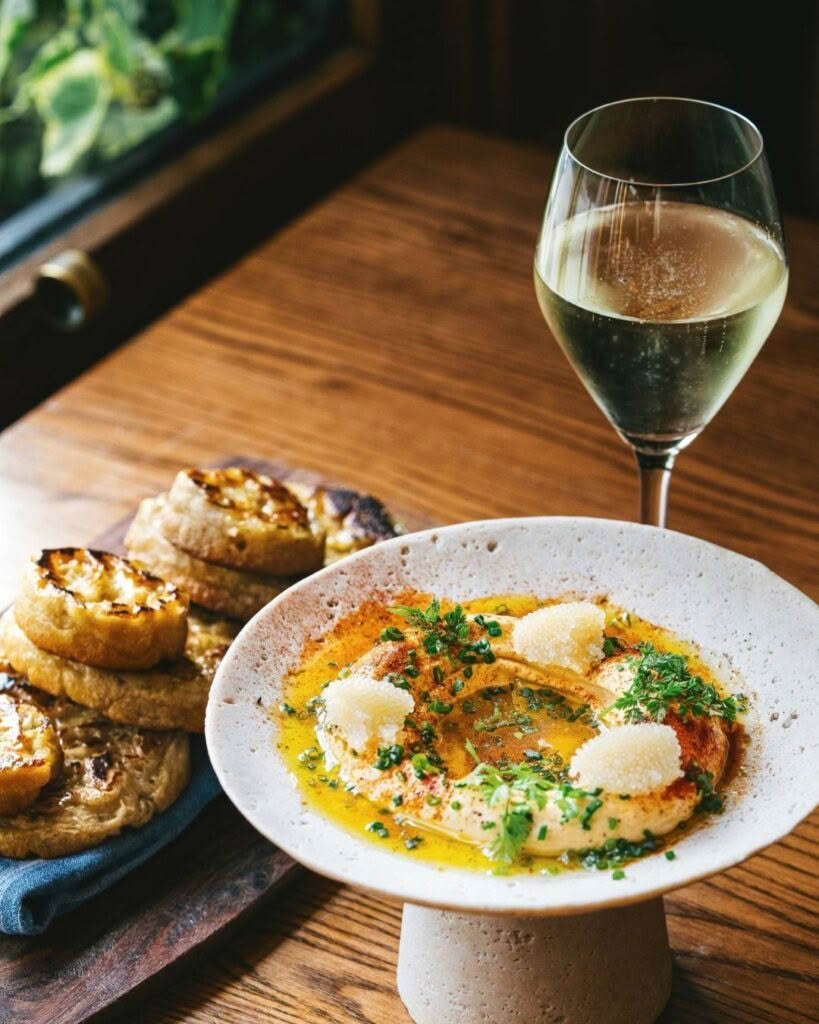
English crumpets fresh off the pan, golden and spongy, ready to soak up a generous dollop of silky, smoky and rich taramasalata. They are simple, a little indulgent and very hard to stop eating.
View the recipe collection here
Instructions
| 1. | Combine the yeast with 300ml tepid water. |
| 2. | Allow to sit until frothy, about 5 minutes – this tells you the yeast is active and ready. |
| 3. | In a large bowl, combine the bread flour, salt and sugar. |
| 4. | Add the activated yeast mixture and mix with a stiff spatula until fully incorporated. |
| 5. | Cover and leave to prove in a warm place until doubled in size, about 30-45 minutes. |
| 6. | Dissolve the baking soda in 80ml tepid water. |
| 7. | Once the dough has doubled, pour in the soda solution and mix vigorously until smooth and fully combined. |
| 8. | Cover again and allow to prove a second time until tripled in size, about 30-45 minutes. |
| 9. | The batter should now look airy, elastic, and full of life. |
| 10. | While the batter completes its second prove, prepare the crumpet rings (or use metal cookie cutters). |
| 11. | Warm a small saucepan of canola oil to approximately 120°C. |
| 12. | Lower the heat to maintain this temperature. |
| 13. | Put the crumpet rings into the oil to heat. |
| 14. | Heat a non-stick frying pan over low-medium heat. |
| 15. | Place a heated, lightly oiled ring into the dry pan. |
| 16. | Do one small practice crumpet first to dial in your pan temperature. |
| 17. | Spoon in enough batter to just cover the base of the ring. |
| 18. | Now watch carefully – if the temperature is correct the crumpet will slowly rise, the surface will begin to look slightly dry and small holes or dimples will form; if it is too hot you’ll get a burnt base and a raw centre; too cool and you’ll have a dense, pale crumpet. |
| 19. | This process cooks the crumpet almost entirely on one side, which is key. |
| 20. | Once the top looks set and dimpled, remove the ring and flip briefly to colour the top side. |
| 21. | Cook just long enough to achieve light golden colour, about 2-3 minutes depending on the size. |
| 22. | Remove and cool on a rack. |
| 23. | Repeat until all the batter is used. |
| 24. | TARAMASALATA |
| 25. | Put the rapeseed oil in the freezer until extremely cold but not frozen solid – the colder the oil, the more stable and silky your taramasalata will be. |
| 26. | Combine the remaining ingredients in a food processor with 50ml cold water and blend until completely smooth. |
| 27. | With the blender running, gradually and steadily drizzle in the very cold oil, just as if you were making mayonnaise. |
| 28. | The mixture will thicken as the oil is incorporated and the emulsion forms. |
| 29. | Continue until all the oil is absorbed, or the emulsion reaches your desired thickness – it should be smooth, spoonable and luxurious. |
| 30. | TO SERVE |
| 31. | Spoon the taramasalata onto a plate and flatten gently with the back of a spoon, or form into a ring. |
| 32. | Sprinkle over some chives and black pepper, drizzle with good olive oil and top with a little caviar (if using). |
| 33. | Serve with toasted crumpets. |
Recipes & food styling Josh Phillips
Photography Sam Stewart