
Ingredients
| canola oil spray or canola oil, for the pans | |
| 350g plain (all-purpose) flour | |
| 1½ teaspoons baking soda | |
| 300g white (granulated) sugar | |
| 1 teaspoon fine sea salt | |
| 335ml soy milk | |
| 150ml canola oil | |
| 1 tablespoon apple cider vinegar | |
| 1 teaspoon vanilla extract | |
| 3 tablespoons grated lemon zest (from 3 medium lemons) | |
| ELDERFLOWER FROSTING | |
| 200g plant-based butter, at room temperature and cut into small pieces | |
| 720g icing sugar, sifted | |
| 45-75ml soy milk, at room temperature | |
| 3 tablespoons elderflower syrup | |
| ½ teaspoon fine sea salt | |
| ASSEMBLY | |
| about 130g Vegan Lemon Curd | |
| large and small flowers and greenery, rinsed, dried completely |
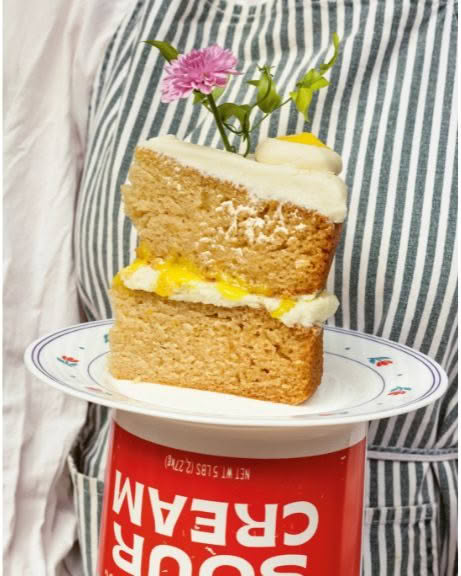
Incredibly moist and zesty, this was one of the first recipes I developed for the bakery because I kept getting requests for vegan cakes. I pair the curd with lemon sponge and elderflower frosting, a classic combination that should stay that way! It’s tempting to use different plant-based milks, but I find soy milk produces the best structure and texture for both the sponge and the frosting. The recipe includes a range for how much soy milk to use in the frosting, so you can experiment with how soft or stiff you make it. In the summer, when the kitchen is warm, I usually need to use a bit less.
View the recipe collection here
Instructions
| 1. | LEMON CAKE |
| 2. | Set a rack in the middle of the oven and preheat to 160°C. |
| 3. | Spray or brush the bottom and sides of two 20cm round cake pans with canola oil, then line the bottoms with baking paper. |
| 4. | Sift the flour and baking soda into a medium bowl. |
| 5. | Add the white (granulated) sugar and salt and whisk to combine. |
| 6. | In a large bowl, whisk together the soy milk, canola oil, vinegar and vanilla. |
| 7. | Add the flour mixture in three additions and whisk until there are no lumps. |
| 8. | Add the lemon zest and fold with a rubber spatula until incorporated. |
| 9. | Divide the batter evenly between the prepared pans and bake for 15 minutes, then quickly rotate the pans and bake until the cakes spring back when lightly pressed, about 15 minutes. |
| 10. | Let the cakes cool in the pans on a wire rack for 20 minutes. |
| 11. | Carefully run a small offset spatula between the edges of the pans and the cakes, then flip the pans onto the rack and tap them to make sure the cakes are released. |
| 12. | Remove the baking paper. |
| 13. | Use a second rack or a plate to flip the cakes so they are right-side up on the rack. |
| 14. | Let cool completely. |
| 15. | ELDERFLOWER FROSTING |
| 16. | In a stand mixer fitted with the paddle, beat the plant-based butter on medium-high speed, scraping down the bottom and sides of the bowl as needed, until creamy and lighter in colour, about 3 minutes. |
| 17. | Scrape the bowl, then add 120g of the icing sugar and beat on low speed for 15 seconds. |
| 18. | Increase the speed to medium and beat until fully incorporated, about 15 seconds. |
| 19. | Repeat the process 5 times, scraping the bowl before each addition and again at the end, until fully incorporated. |
| 20. | Add 3 tablespoons of the soy milk, along with the elderflower syrup and salt, and beat for 1 minute. |
| 21. | Increase the speed to high and beat until fluffy and easily spreadable, about 2 minutes. |
| 22. | If the frosting is too stiff, add more soy milk, 1 tablespoon at a time, until spreadable. |
| 23. | TO ASSEMBLE |
| 24. | Place a cake layer, flat-side down, on a cake plate or stand. |
| 25. | Put about 520g of the frosting into a piping bag fitted with a plain round tip with a 13mm or similar diameter. |
| 26. | Holding the pastry tip about 2.5cm above the cake and starting about 13mm from the edge, pipe 2 concentric rounded rings of frosting around the perimeter. |
| 27. | Spoon the lemon curd into the middle and use a small offset spatula to spread it evenly. |
| 28. | Pipe zigzags of frosting on top of the curd so it’s completely covered. |
| 29. | Using a small offset spatula, gently spread the frosting zigzags to fill in any gaps and connect them to the outer rings of frosting, while leaving them intact. |
| 30. | Carefully place the second cake layer, flat-side up, on top, then gently wiggle it into the frosting. |
| 31. | Add more frosting to the piping bag as needed. |
| 32. | Repeat the above process but pipe a single ring on the very edge of the cake and skip the curd. |
| 33. | Once the top is covered in buttercream, use the tip of a small offset spatula to create some swooshes and texture on top of the cake. |
| 34. | Holding the pastry tip about 2.5cm above the cake, pipe 4 large dollops of buttercream along the outside edge of the cake. |
| 35. | Dip a teaspoon in hot water, then use it to create divots or ‘bowls’ in each dollop of buttercream. |
| 36. | Use two small spoons to plop some curd in each buttercream ‘bowl’. |
| 37. | Arrange a few large flowers and greenery on top of the cake, then fill in any remaining gaps with small flowers. |
| 38. | The cake (without foliage) keeps covered in the refrigerator for up to 4 days. |
| 39. | Remove the cake about 1 hour before serving. |