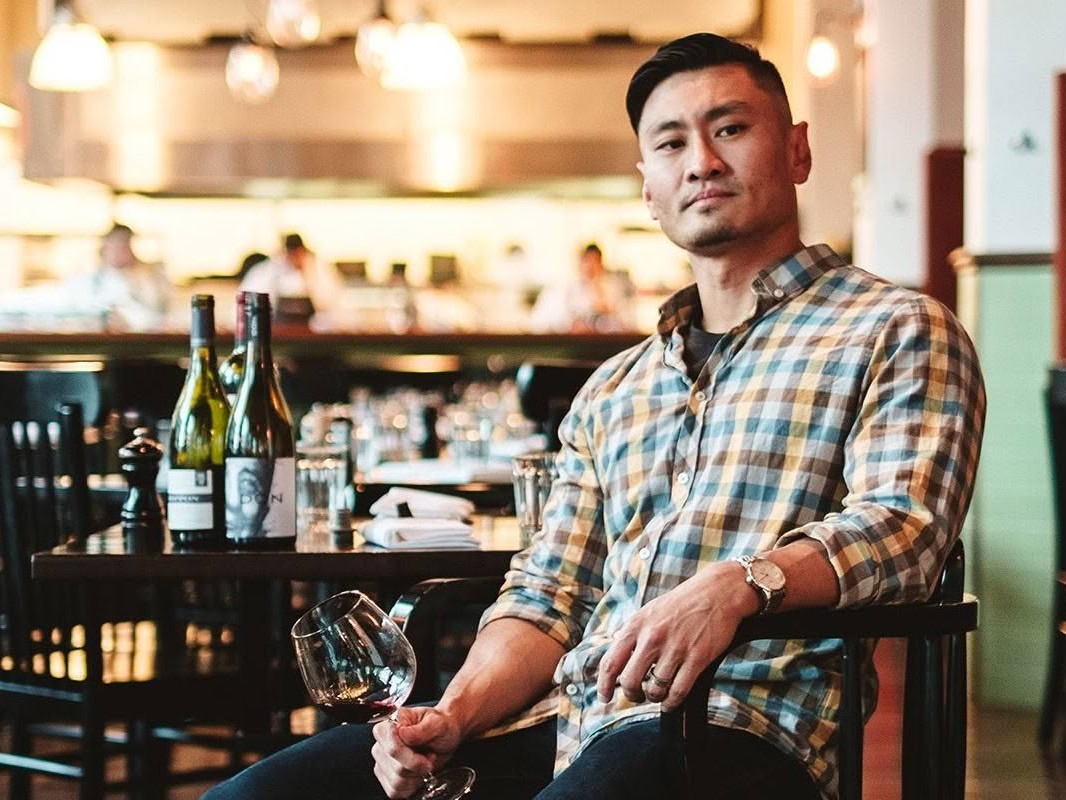
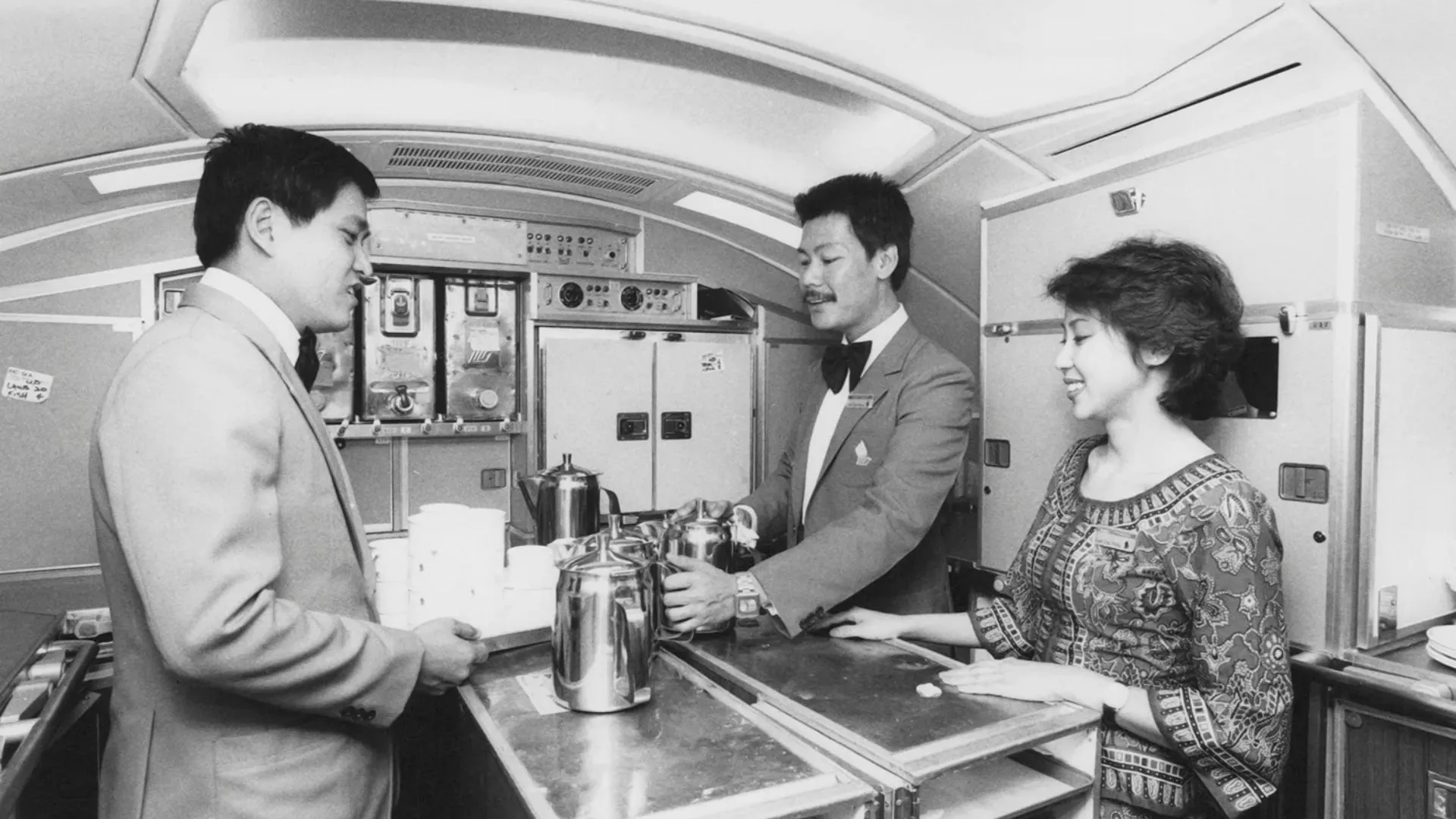
Airline dining has come a long way over the past 50 years. In the 1970s, flying was the height of glamour – think martinis and caviar served inflight while whole lobsters and roasts were presented in the First Class cabin. Today, the experience has evolved into something more considered, with greater choice and transparency. There is a focus on fresher, healthier options, alongside an increasing emphasis on sustainability. Inflight dining and service have changed significantly, now prioritising safety and catering to the diverse demands of a growing population of travellers. Singapore Airlines has seen it all. We spoke with Damien Le Bihan, the airline’s Food & Beverage Director, to reflect on the evolution of inflight dining and celebrate Singapore Airlines’ 50-year anniversary of operating flights from Auckland to the world.
Fifty years in the air is no small feat and, for Singapore Airlines, the Auckland route has been a story told not just in miles, but in meals. From individually tailored service to today’s precision-led dining, the evolution of inflight cuisine reflects a broader shift in how we travel, eat and define luxury at 30,000 feet. In the early years, flying was an occasion. Dining onboard was shaped by flexibility and attention to detail, with cabin crew given greater autonomy in how dishes were presented and served. “Inflight dining was positioned as a luxury, with a strong emphasis on theatre and personalisation,” says Damien. It was a time when no two plates had to look exactly the same. Today, that approach has evolved into something more measured, but no less thoughtful. “Passenger expectations have evolved. There is now a stronger demand for choice, personalisation and healthier options, alongside greater awareness of quality and value.” What has remained is a focus on elevated dining in premium cabins, creating a fine-dining atmosphere in the air. That shift mirrors a deeper change in passenger mindset. Where once indulgence defined the journey, now it is balance. Travellers want choice, transparency and food that aligns with how they eat on the ground. “Inflight dining is no longer judged solely as a luxury feature, but as an integrated part of the overall travel experience,” he says. “Consistency, relevance and quality must all be delivered at scale.”
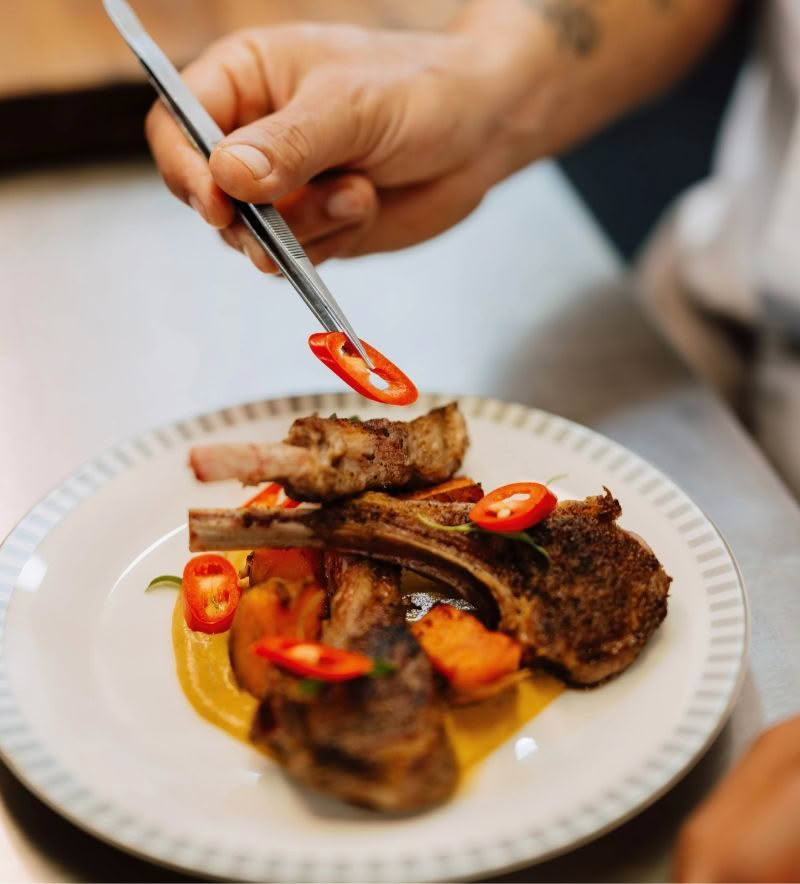

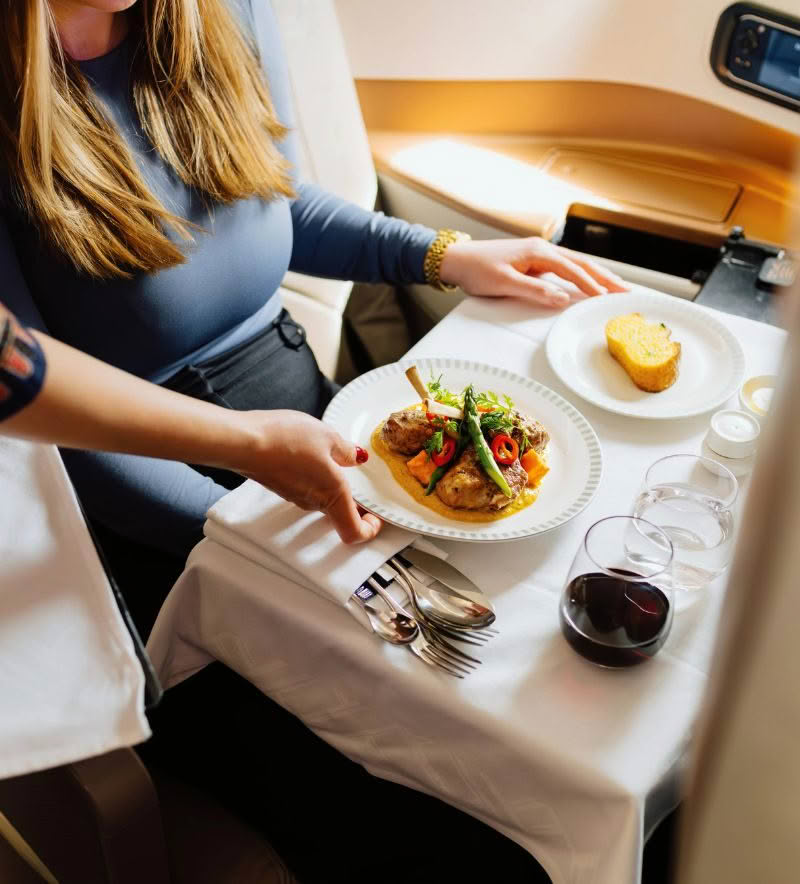
Designing a menu for the sky is an exercise in both creativity and constraint. At altitude, taste perception shifts, textures change and even the most carefully composed dish must withstand chilling and reheating. “The biggest challenge lies in maintaining quality through the reheating process,” Damien notes. “Delivering restaurant-quality food in the air requires balancing culinary ambition with operational reality.” Innovations such as natural jellies and glazes help elevate flavour during reheating, releasing extra moisture and enhancing dishes as they warm. The result is food that feels complete rather than compromised. It is not about replicating a restaurant, but reimagining it for the cabin.
On Singapore Airlines flights from Auckland and Christchurch, the influence of New Zealand produce is unmistakable. The menu leans into a clean, natural flavour profile built around ingredients that speak for themselves. King salmon, grass-fed beef and lamb feature prominently, chosen not only for their quality but also for their ability to retain integrity throughout the journey. “We incorporate premium local produce, allowing us to showcase the strengths of New Zealand’s agriculture,” says Damien. Seasonality also plays an important role. Working with ingredients at their peak ensures both flavour and consistency, grounding each dish in a sense of place. It is a subtle but important connection, linking departure point to plate.
The future of inflight dining may feel surprisingly familiar. After decades of innovation and complexity, the focus is returning to fundamentals. “The next chapter is about natural flavours, authenticity and a more honest expression of ingredients,” says Damien. Local dishes, executed with clarity and respect, will take centre stage, while menus will continue to be shaped by passenger feedback, with wellness and balance guiding development. Service, too, will evolve, finding that delicate middle ground between efficiency and refinement. “Ultimately, the future of onboard dining is not about adding complexity, but about delivering simplicity with precision.”
Fifty years on, the journey between New Zealand and Singapore is still defined by what happens at the table. Only now, the details are sharper and the experience more meaningful than ever.