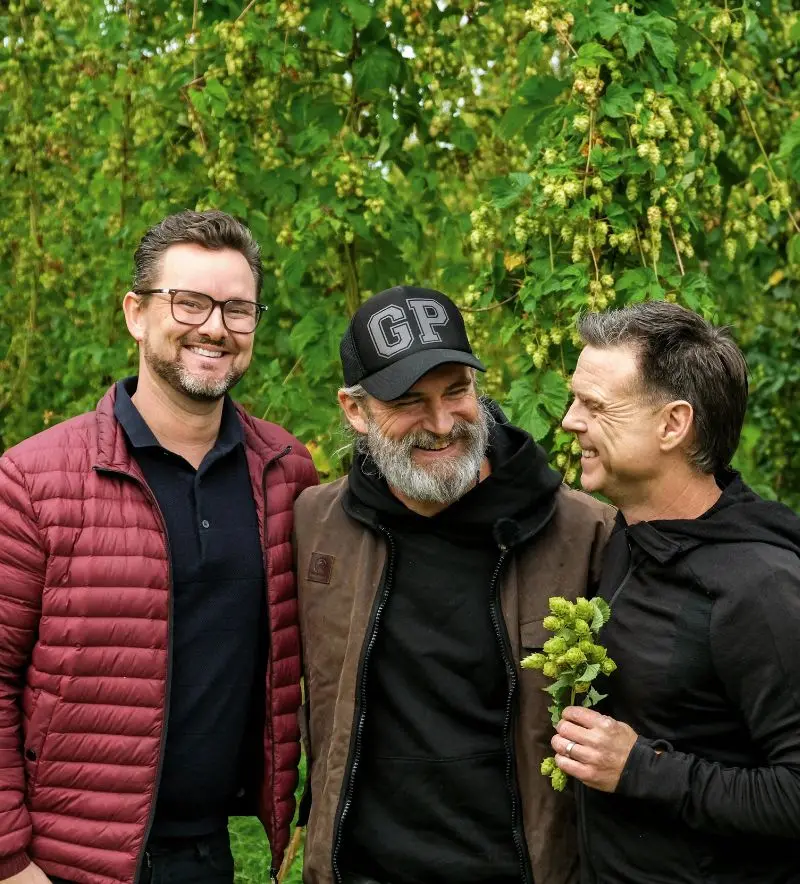
How did I not know that New Zealand hops are world famous?’ I think to myself, as I am listening to the infectious enthusiasm of Pete Gillespie of Garage Project beer fame.
This is another humbling moment for me when filming A New Zealand Food Story, when I thought I knew a little bit about a topic. In this case, the fine and important topic is beer, for which I have, at times, a particular enthusiasm for over-consumption. But the reality is that, in the presence of the great Pete Gillespie, I actually know sweet F.A.!
We have travelled to Tūtaki Hop Farm, an hour’s drive up a gravel road from Murchison, to meet Pete, with zero cellphone coverage and praying that we have got the directions correct. It’s the absolute sticks, and it is spectacular!
They call this place the “Hidden Hop Valley” and as we arrive I feel like Frodo in the Fangorn Forest. It’s completely surrounded by an amphitheatre of snow-capped, steep mountain ranges that flow into majestic beech forests and is the meeting point of the Mātakitaki and Tūtaki rivers. This old gravel road leads us to a large clearing on the river flats that is now the home of Nelson Lakes Hops and one of New Zealand’s largest hop farms.
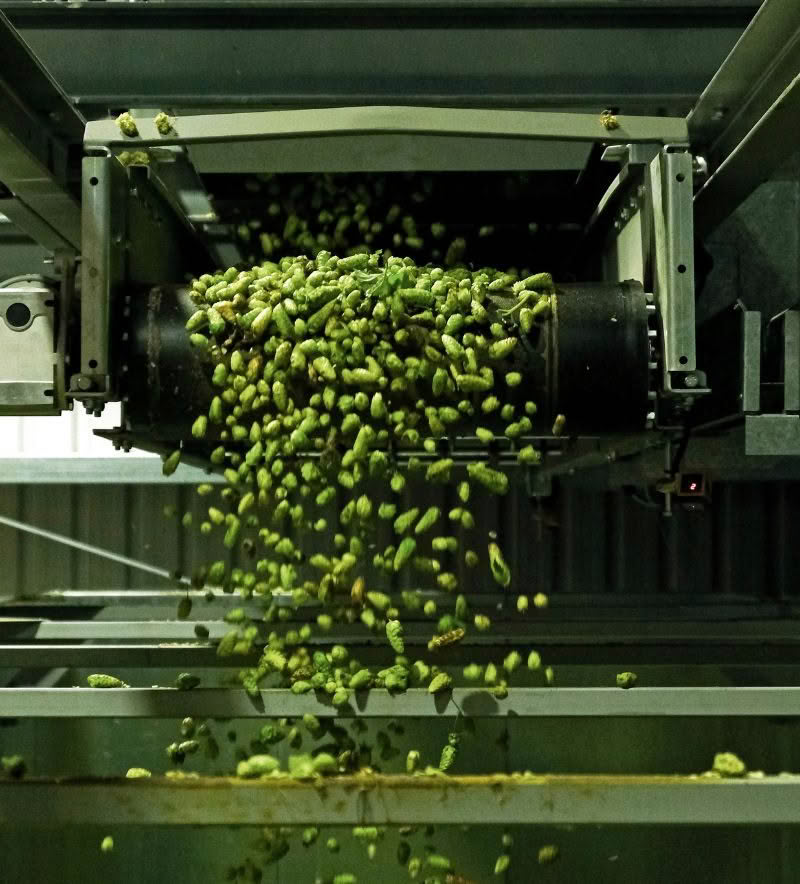
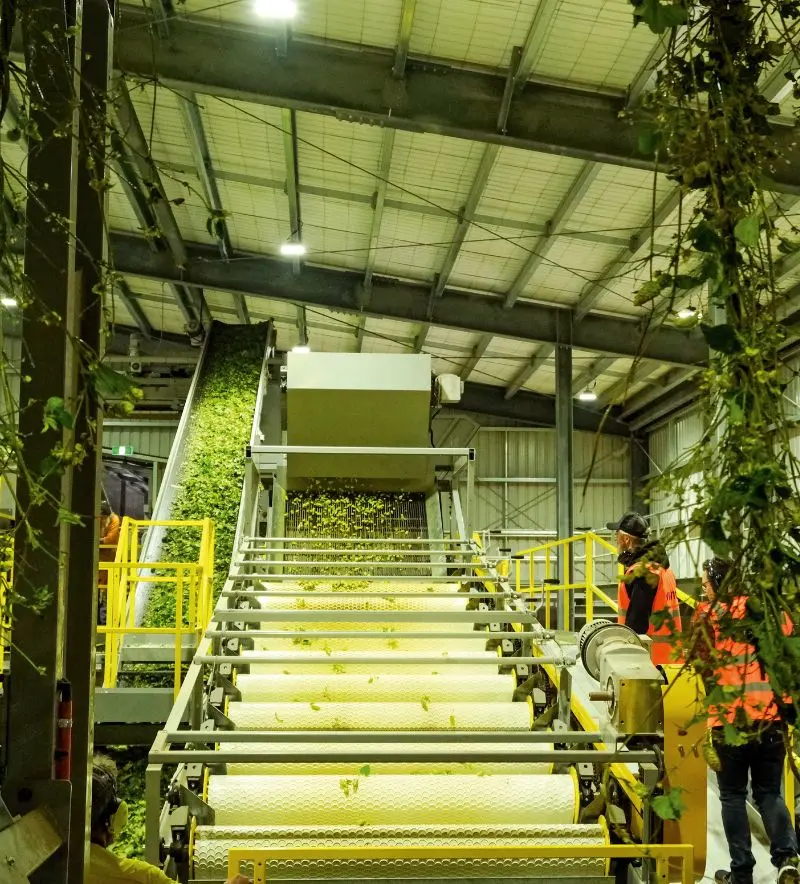
The awe-inspiring high-country plateau landscape and far-flung location is juxtaposed against the state-of-the-art, massive five-storey hop-processing factory that is in full swing for the autumn harvest. I just can’t believe my eyes as we watch 25-foot-long freshly harvested hop vines being pulled up into the machinery, which delicately removes precious hop buds from the vines and leaves, then quickly conveys them on belts to the huge drying rooms to lock in the freshness that the brewers are looking for.
The factory floor aroma is incredible, too, and the first fun fact we learn is that hops are very closely related to the cannabis plant… and as we breathe deep, there is no convincing needed.
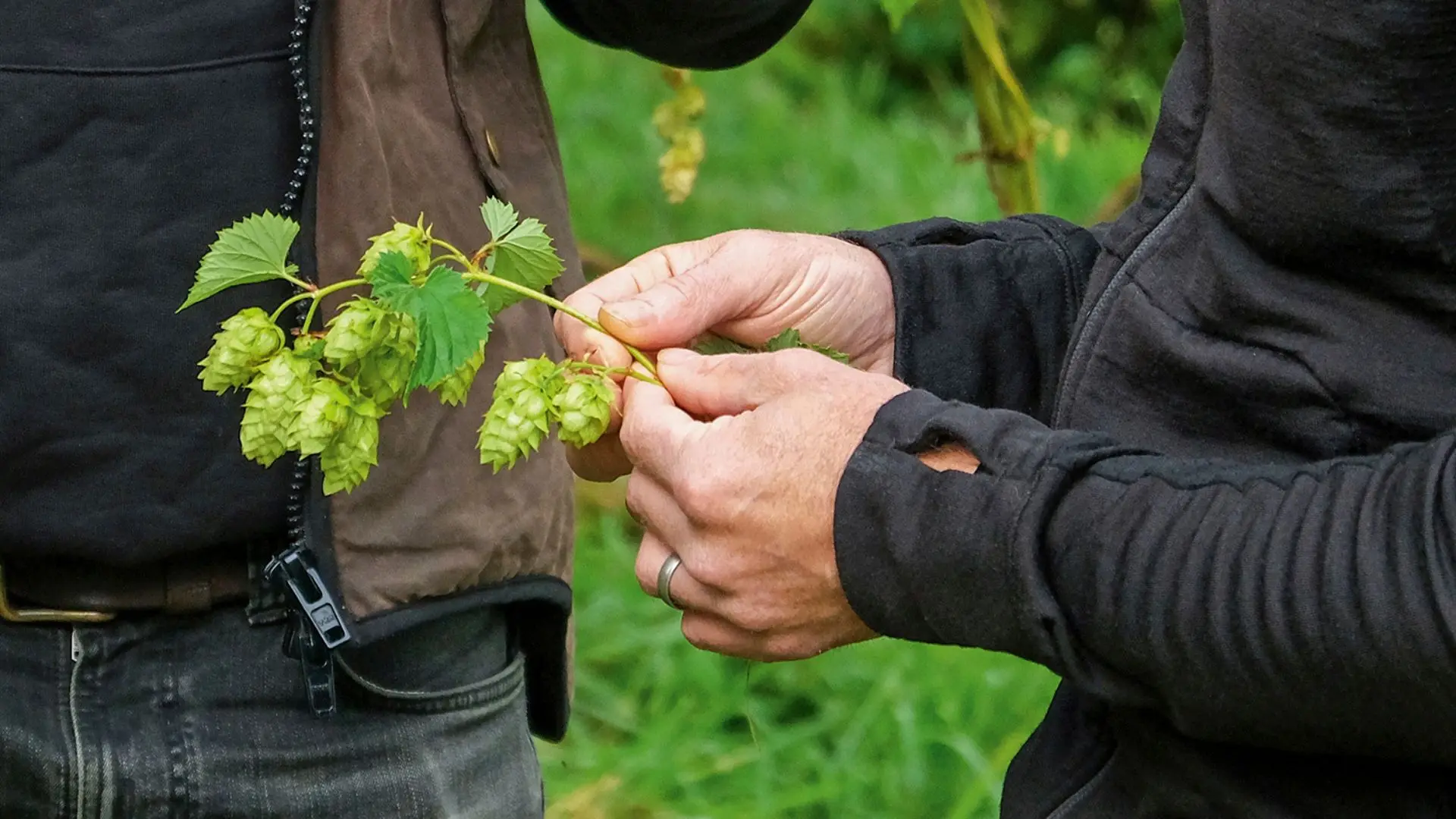
I am confused by this word “bine” because it looks like a vine. Bines are similar, except they have hairy follicles that latch onto anything for climbing, and I can just imagine these plants, before humans discovered their power, smothering an old tree in the wild as they searched for light.
Over summer, the hop buds grow and develop into magical cones, then dry slightly until the autumn harvest, bringing us to this moment now.
And magical cones they are! 85% of New Zealand hops are exported, as they are highly sought after by brewers worldwide, because the flavour of Kiwi-grown hops is unlike any other in the world. We have a ton of our own varieties now such as Riwaka, Nelson Sauvin, Pacific Gem, Pacific Jade and Motueka; the list goes on and is growing every year. Each hop has its own unique and desirable tropical flavour profiles that are only found here.
“Even if you took a Kiwi hop variety and grew it overseas, it would not taste anything like what we do here,” Pete explains. “It’s the ultimate expression of beer terroir and these international brewers look to this New Zealand primary ingredient for excellence and X factor.”
“Pete’s creativity, love of his industry and craft, and his passion for sourcing and growing the best raw ingredient possible is a marvel, and it really pumps me up. Pete and Garage Project are putting New Zealand hops and brewing on the world map and this is backed up by them winning New Zealand’s first ever gold medal at the World Beer Cup – the ‘Beer Olympics’ – for his Engeltjes Pis!”
Beer has always been cool for me, but it has just got a whole lot more interesting, as learning about this crazy plant – that smells like weed, has roots like ginger, looks like a vine, tastes like asparagus and grows cones used to make beer – is truly fascinating and it deserves its time in the sun.