
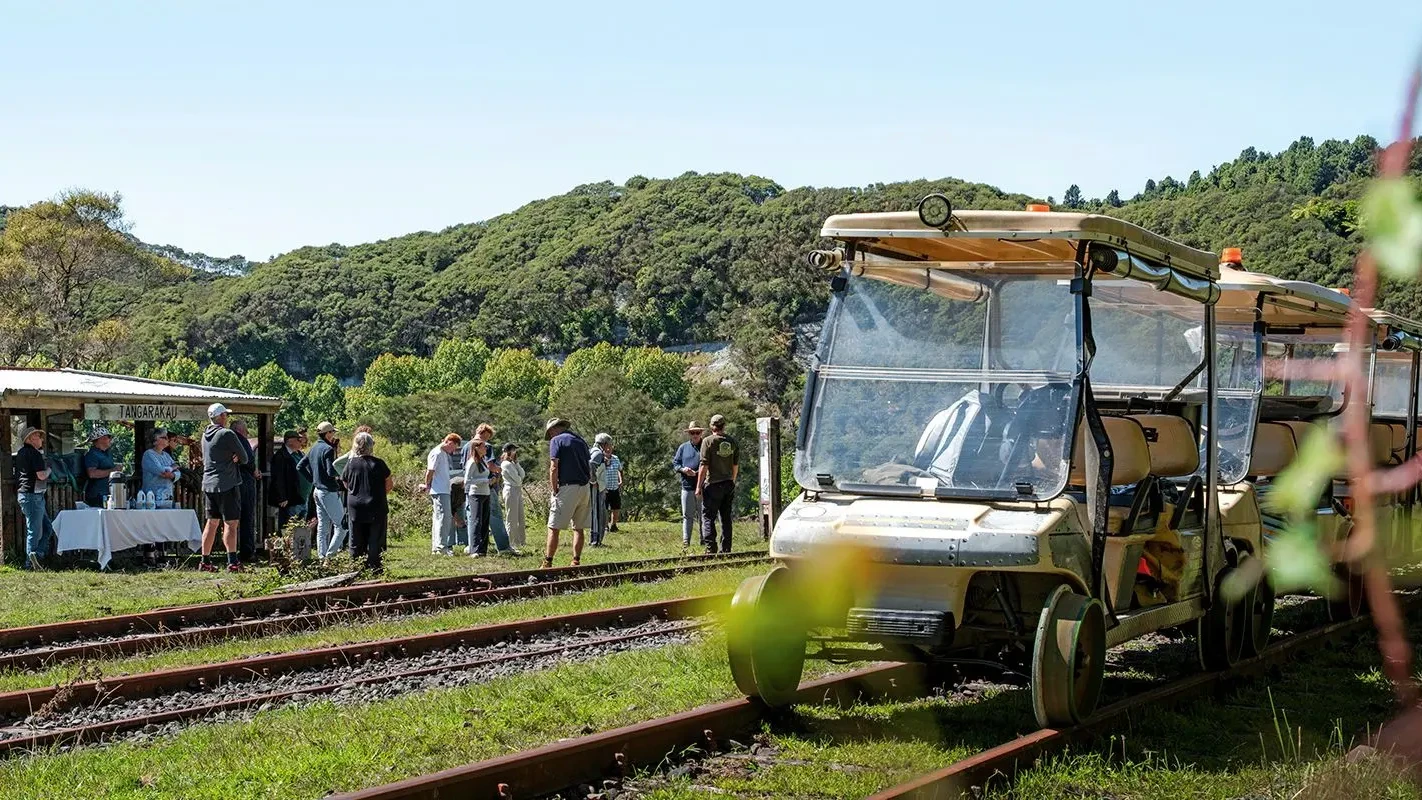
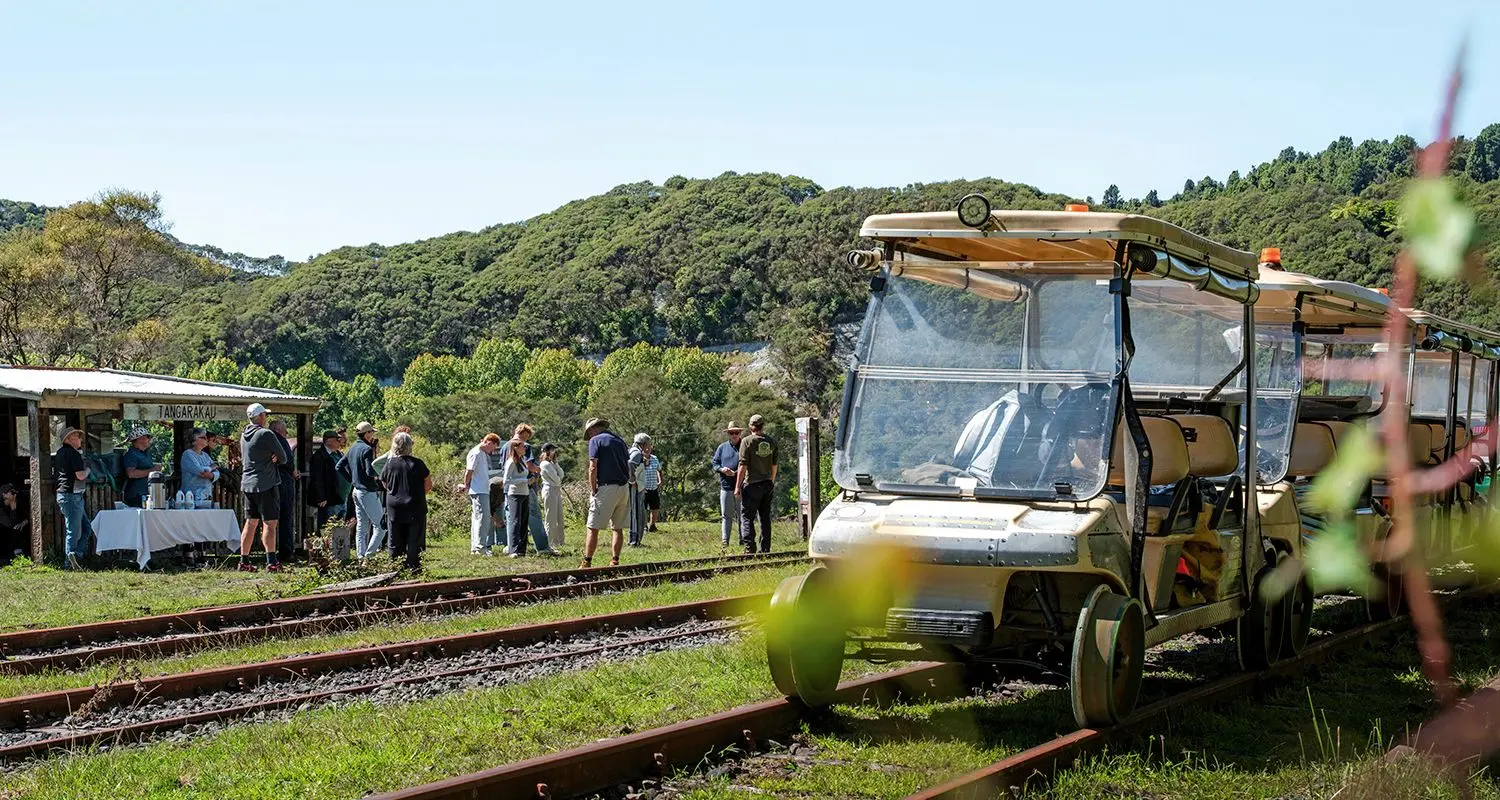
A magical exploration awaits in an almost forgotten world in the central North Island. Journey for four days, travelling in a converted golf cart chugging along the discarded Stratford–Okahukura Line railway, then a bus from Stratford for a jet boat ride up the mighty Whanganui River with knowledgeable local guides, to examine the area’s rich history, culture, farmland and pristine native bush – it’s truly an epic experience in ‘Big Country’ guided by the team from Forgotten World Adventures (forgottenworldadventures.co.nz).
Join us in welcoming our very first six Cuisine TasteCurators in 2025.
Well known for never leaving home without carefully researched dinner reservations, it was a revelation for me, a trip where my usual plans for booking cutting-edge food had to be abandoned. However I found that good honest Kiwi cooking is alive in our heartland.
The 142km-long historic Stratford–Okahukura Line was an ambitious build in the early 20th century to connect valuable farming land and to open up opportunities for trade and industry. Our first stop was morning tea at historic Matiere, with its perfectly kept Town Hall, next door to the handsome Margan’s building, the business of a well-to-do brick maker, who opened an adjacent bakery around 100 years ago. The story goes that many of the locals reckoned it hard to tell the difference between Mr Margan’s bricks and his loaves. Hot tea or Milo, accompanied by a toothsome mumble slice, set the pattern for our food-as-fuel stops. A local treasure, Midge (Michelle Te Ahuru), bakes and prepares all food for the trip. She won’t share her recipes.
Twenty-two tunnels on the track – the longest is 1525m – are deep under those mountains and hills, and are chilly even in summer. Stops take in all the history and tales of the past, and are carefully planned around picnic morning teas, build-your-own sandwich lunches and afternoon cuppas. At Ōhura, the land is fertile, perfect for farming cattle and sheep who munch on lush grass, and in clear rural air the views from the rail carts were stunning.
Just out of Ōhura, Paparata Station is an exemplary farm business which owner Trevor Johnson has divided into four productive farms. Opposite, an offshore investor has cleared the land for vast pine plantings as an investment scheme for international companies to lease (trees can’t be felled for 99 years) to claim carbon credits to offset their emissions. Food for thought in a country where wilding pines are a concern. Then there’s a stop at Tāngarākau for Pouatu Mãnuka honey (pouatumanuka.nz) which is sweet, fragrant and high in UMF (Unique Mānuka Factor) – most is exported to Japan, Singapore and the UK but you can find it online and at a couple of outlets in Stratford or Taumaranui.
The rail track mirrors the path of the famed Forgotten Highway and an overnight stop took us to the legendary and rustic Whangamōmona Hotel (whangamomonahotel.co.nz). Its walls are covered with historic photos, the bar filled with regulars and we enjoyed a beer or two to accompany a true Kiwi-style meal – hearty lamb shanks with mash and veges were a hit.
Next morning, a rockfall on the track barred our railcart’s progress, but our guides shovelled the debris away in about 20 minutes. Later there was another stop needed to chainsaw away a huge tree that had fallen across the track. We made a brief stop at a unique farmlet aside the track, to view the work of an eccentric farmer, John Earney who saves and farms rare breeds of animals at Avonstour Island Heritage Organic Farm (facebook.com/AvonstourOrganicHeritageFarm). Waipu angora goats (originally from Turkey), Auckland Island pigs and rare breeds of poultry gazed at the curious visitors. Homemade jam, pickles and chutneys made with unusual plantings were offered for sale.
The early workers on the rail track had hard lives, and our guides shared stories of the camps, construction methods in all weathers, hand excavations and creation of tunnels and tracks. Dark clouds gathered after lunch at the end of our rail journey at Stratford, as an intrepid eight of us carried on by bus to Whanganui, for the planned jet-boat trip next day.
We dined together at St John’s Club (stjohnsclub.co.nz), a community hub for entertainment, dining and socialisation for over 100 years, but with pub quiz night, TV screens displaying the races for punters at the in-house TAB, and the local Rotary Club meeting in one corner, it was overwhelming for a first-time visitor. We headed to the dining room where three chefs pumped out a stream of hearty plates as large as serving platters, filled with crisp battered fish and scallops, chips, roast and grilled meats, pasta, lamb shanks, veges and salad. These lamb shanks, again, deservedly earned their place as good Kiwi kai staples. Then it was off to Aotea Motor Lodge for the night (aoteamotorlodge.co.nz).
Next day was a real treat with Tracey Marshall, a local tour operator (whanganuitours.co.nz) who also owns the local mail delivery trail on the Whanganui River road – mail was distributed by one of the nimbler members of our group while Tracey regaled us with stories and history of the area. She grew up on the Whanganui River near Matahiwi so we made a stop at Matahiwi Café (matahiwicoffee.com) in the old schoolhouse, for cream scones and a coffee that would rate highly in any place. Two to three thousand Māori people inhabited the area in early days, and numerous marae are tucked along the river, a fertile area that has always been almost self-sufficient in food. The carefully preserved Kawana Flour Mill, was one of several utilising the power of the great river to drive water wheels to produce flour. Wheat was an extensive crop, but sadly is no longer grown in the area.
Tracey’s iwi own the impressive Koroniti Marae with lawns neatly mowed, rose gardens and buildings glistening. In nearby Jerusalem, the historic St Joseph’s Church of the famed Suzanne Aubert, and memories of poet James K Baxter ensure the town remains in the history books.
At Pipiriki, the jet-boat ride commences, against the flow, and proceeds with frequent stops to observe places of commerce and transport on the Whanganui River. Large vessels used to be winched through stony rapids but it’s now an adventure playground with canoes and kayaks tied up at DOC-administered camps along the riverbanks. The Bridge to Nowhere is a small-scale engineering and construction feat on a tributary of the river. It took two builders two years to create, carrying in all the concrete and materials to make a perfect bridge for families of returning World War I servicemen who were balloted land that ultimately proved to be just too hard to farm. Accessed by a 2.7km hike, we ate packed lunches there in soft drizzly rain.
The river was in flood, so numerous waterfalls and tributaries tumbling into the river made stunning viewing. The last evening was at Blue Duck Station (blueduckstation.co.nz), a large eco-minded station and farm. We enjoyed well-furnished lodges, dinner and breakfast at the Blue Duck Station Café. The station’s other attraction is a well-known gourmand destination, set high in the clouds above the station. Privileged travellers arrive there by an ATV two-hour bush experience. I didn’t get there this time, as I was dog-tired, though happy, from our long day and knew that such a special experience would have been wasted on me that day. Instead, a lovely roast beef dinner with Yorkshire pudding and trimmings fitted the bill, with a delicious dessert of feijoa cake. One day I plan to return, of course, refreshed.
Overnight rain made the river higher, the waterfalls more spectacular and the surrounding pristine native bush more sparkly with fresh water as we spotted a pair of the namesake whio (blue ducks). Finally, a lunch stop at Lauren’s Lavender Farm (laurenslavender.co.nz). If there’s one thing that always makes a true Kiwi roadie trip a success, it’s a meat pie and classic tomato sauce. A whole plateful awaited us, making me very happy.
SEE MORE FROM CUISINE

Cuisine Taste Curators
Our digital collaboration championing the people and places that make…
Karikaas Cheese / Vintage Maasdam
Paul Broughton is head cheesemaker at Remutaka Pass Creamery and…