
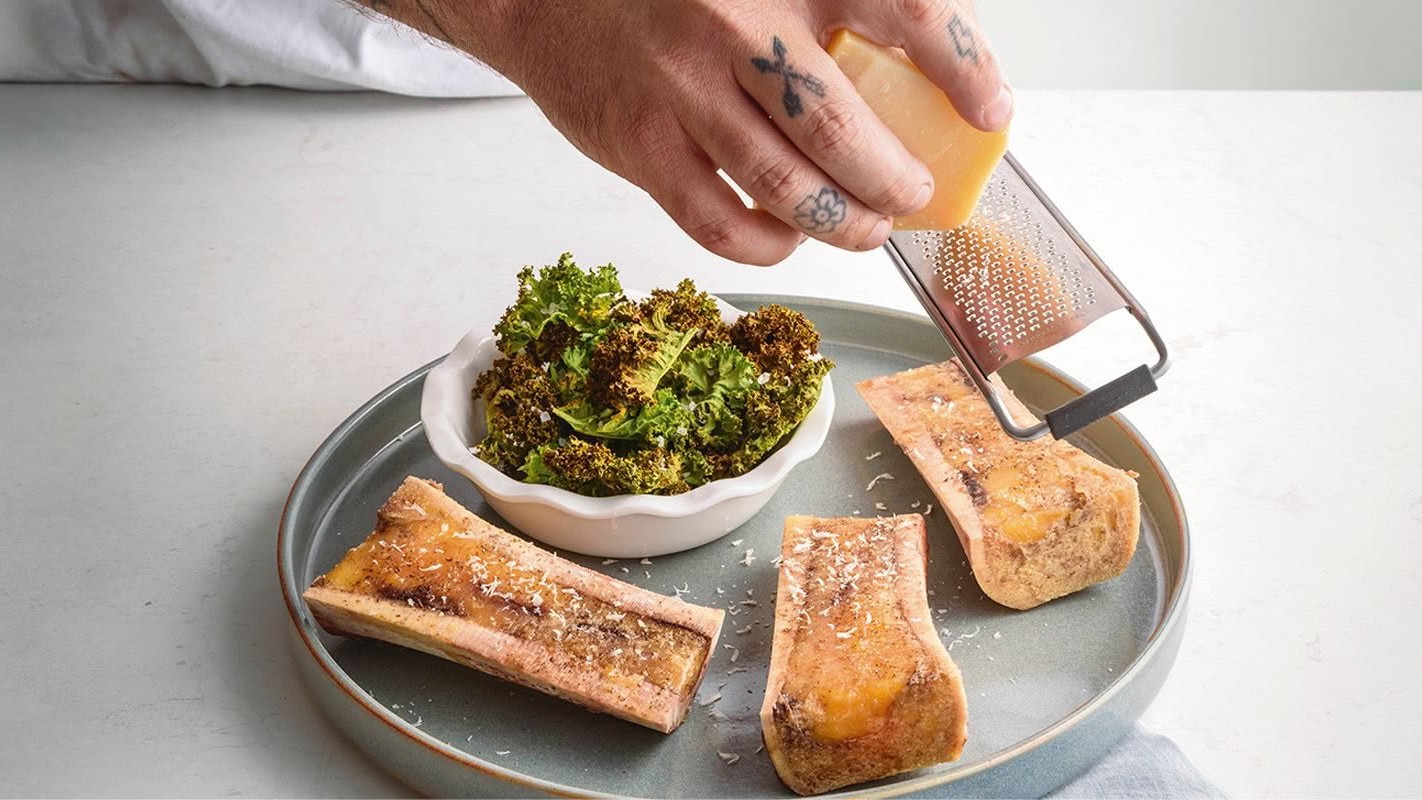
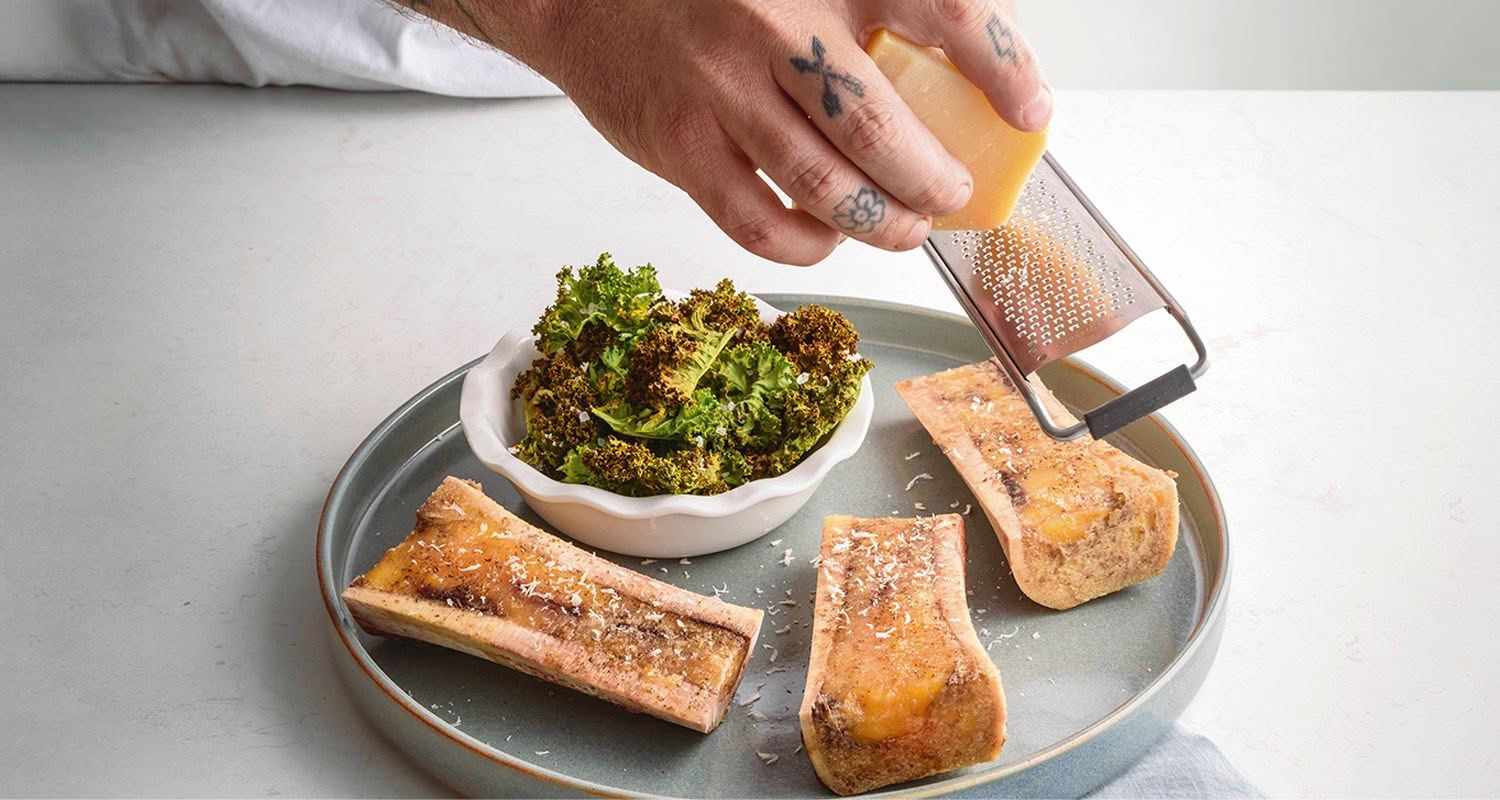
GROWING UP NORTH of Auckland, my family was fortunate enough to live on a peninsula of land surrounded by bays and coastlines. We would fish, hunt, dive and forage, utilising the surroundings of the place we were lucky enough to call home. Some of my earliest memories involve catching fish with my older brothers. We would only ever take exactly what we needed – no more, no less – and we seemed to be able to make that fish stretch such a long way. Although the fillets were the most prized, we would also use the bones for the broth of a chowder, or we’d smoke the roe to accompany crackers as an afternoon shared plate.
Fascinated by this concept of making the most of our catch, when I shifted my focus to land animals, I found I didn’t know how to translate the approach. Just like the fillets from those fish, the back steaks and tenderloins again ruled the demand, with no real consideration for what else these animals had to offer. I found myself wondering why that was. Surely previous generations would have been more considerate.
My Nan was of the generation where any food was considered a gift, and it was up to you to experiment to find ways to use and make the ingredients delicious. Nan didn’t have a lot, but she had enough, and really, that’s all any of us need, right?
For years now, I have been watching, learning, writing notes and experimenting in order to create tasty, honest comfort food. Food that feels like home; food that heals; food from the whole animal.
I believe the further you get into your career, the deeper you start thinking about certain things. Maybe it’s just an age thing – however, as I reflect over past years, I can’t help but be saddened that I have witnessed the demise of whole animal eating. It’s not an often-heard term these days, because somewhere along the way offal, and finding ways to use and create with every part of it, has been lost. I strongly believe that food is medicine, and returning to the eating habits of those who came before us can only lead to a more sustainable and beneficial approach to cooking and eating.
Marrow has been 10 years in the making. It was a concept which revolved around both a space and a place. A space to carry out a traditional butchery practice, set within a modern interior. A place for sharing our knowledge of food and recipes. For me, Marrow is a stepping stone to bringing back the concept of the ‘High Street Butcher’. We wanted a space where everyday cooks can visit and get excited about creating amazing food and sharing it with their friends and family. Marrow is more than a kitchen.
SEE MORE FROM CUISINE
Cuisine Taste Curators
Our digital collaboration championing the people and places that make…
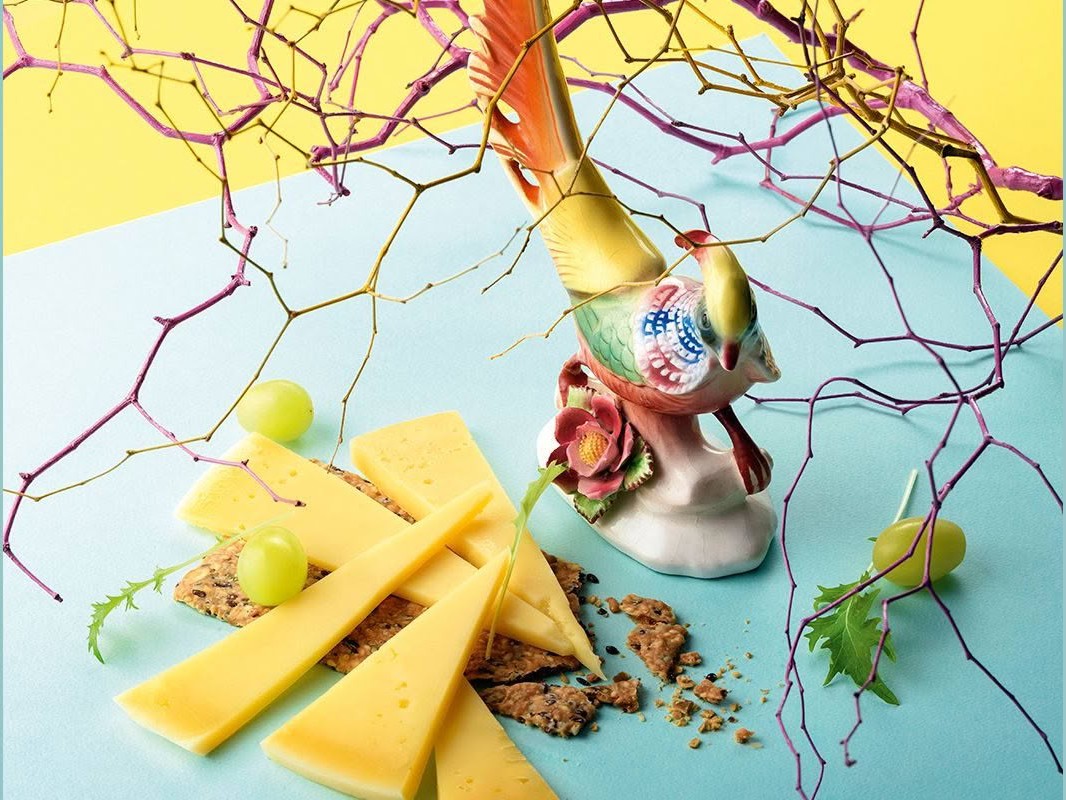
Karikaas Cheese / Vintage Maasdam
Paul Broughton is head cheesemaker at Remutaka Pass Creamery and…