
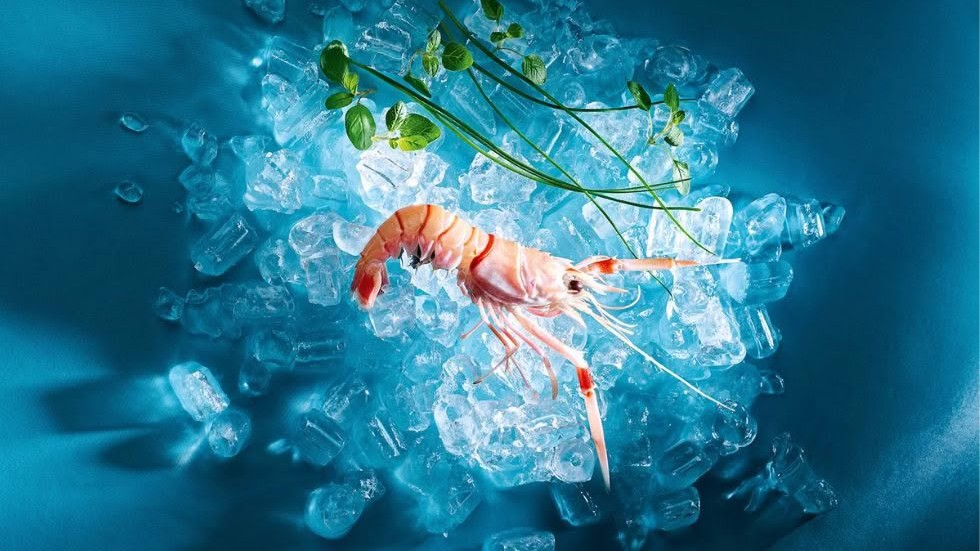
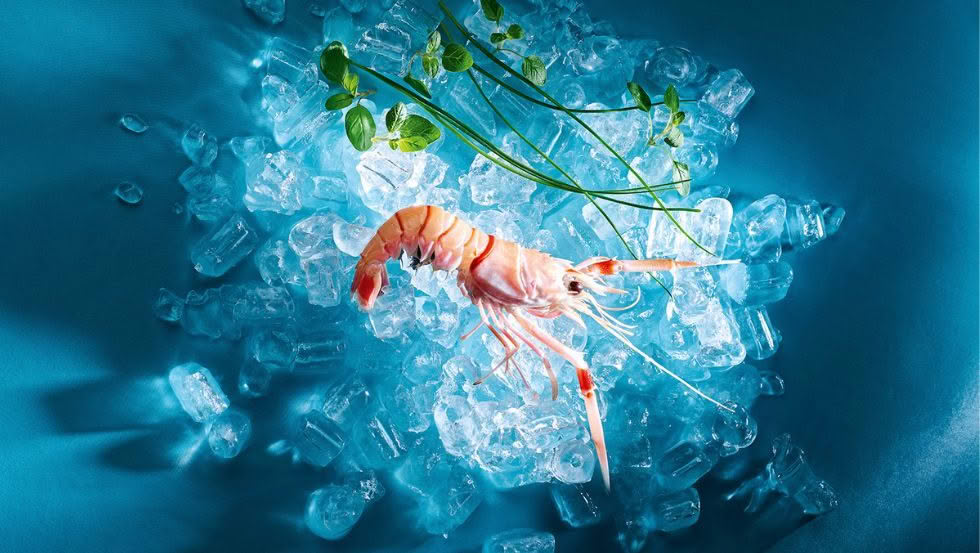
There are some ingredients that arrive at the table already dressed for Christmas. Oysters are one. Crayfish, certainly. And then there is scampi, all long claws, coral-pink armour and the sort of extravagance that suggests somebody has been keeping the good stuff out the back.
We don’t see enough of it in New Zealand. Much of what we catch disappears overseas, where New Zealand scampi commands the sort of attention we tend to reserve for other people’s luxury ingredients. And that isn’t simply my own impression, as the Commerce Commission has previously noted that relatively little New Zealand scampi is consumed domestically, with limited catch and strong export demand helping explain why. In other words, we catch one of the world’s great little crustaceans, put it on a plane for others to enjoy and then wonder why we don’t see much of it at the fish shop.
Perhaps familiarity hasn’t bred contempt so much as a failure to notice what is sitting in our own waters. Or perhaps, sadly, we have simply become accustomed to exporting the things the rest of the world is prepared to pay handsomely for.
First, a small piece of housekeeping. New Zealand scampi is not a prawn, despite looking rather convincingly like one. It is a lobster, Metanephrops challengeri, a member of the clawed-lobster family. Nor is it quite the same creature as the Dublin Bay prawn, French langoustine or Norway lobster you find on European menus. That is Nephrops norvegicus, a close relative, but a different species.
Ours is ours, and it lives a long way from the sunny shallows we associate with summer seafood. New Zealand scampi spend much of their lives several hundred metres down, in burrows dug into the soft, muddy seabed of the continental slope. They are found around much of the country, with important fisheries off the east coasts of the North and South Islands, across the Chatham Rise and down around the Auckland Islands.
I had always half-assumed they came up as a fortunate by-catch of the orange roughy fishery: a little pink bonus among the deepwater fish. Turns out, this they don’t. Scampi supports a targeted fishery, using specialised deepwater trawls. It’s a valuable fishery, managed under the Quota Management System, and one we don’t hear nearly enough about.
Perhaps that’s because scampi can be slightly confusing: it is both the name of the animal and, thanks largely to British pubs, the name of something crumbed, deep-fried and served in a basket with chips. Somewhere along the way an extraordinary little lobster became synonymous with something arriving from a freezer in a plastic bag. The real thing deserves better.
Crack one open and the flesh is white, firm and almost startlingly sweet. Think crayfish, but finer; prawn, but with more character. They have a delicate marine flavour and a succulence that needs very little encouragement from the cook. Raw, they are superb; briefly grilled or barbecued, possibly better. The danger is doing too much. Scampi flesh is lean and delicate and doesn’t appreciate being left over the heat while you wander off looking for the wine. Split them lengthwise, cook them shell-side down over fierce heat, and give the flesh only the briefest introduction to the grill. You’re looking for that moment when translucent becomes just opaque and no further.
Butter is an obvious companion. Lemon, naturally. Also, garlic, chilli, parsley or olive oil. Tarragon works beautifully, as does fennel, kawakawa and anything with enough acidity to cut through the sweetness without bullying it.
I enjoy scampi with Japanese flavours, too: ponzu, soy, sesame or wasabi. A little raw scampi with soy and wasabi is one of those mouthfuls that reminds you that luxury doesn’t necessarily require much intervention.
But at Christmas, when the barbecue is already going, I am channelling my inner Argentinian chef, Francis Mallmann (without the magnum of malbec). Nobody wants to be trapped in the kitchen, so I keep coming back to herbs, vinegar and fire.
Which brings me to Norka Mella Muñoz, the diminutive Chilean chef at Palliser Estate Winery. She has built much of her cooking reputation around understanding something elemental that applies particularly well to seafood: if the ingredient is good enough, the job is mostly not to ruin it.
Her chimichurri – a mix of parsley, coriander (as opposed to the Argentinian version with oregano), chilli, vinegar and olive oil – has everything scampi wants. Freshness, heat, acidity and enough garlic to make itself known. I’m tempted not to call it chimichurri at all. “Barbecued scampi with a sharp parsley, coriander and chilli dressing” tells you far more about what you’re about to eat.
Make the dressing ahead. In fact, it improves if you do, giving the garlic and herbs time to settle into the oil and vinegar. My own addition of a saltwater brine prevents the fresh herbs from discolouring. Then all that remains to do is split the scampi, get the barbecue properly hot and cook them quickly. Spoon the dressing over while they’re still warm and put the platter in the middle of the table.
Warning: there will be juice and there will be charred shells; there will be fingers involved, and this is a good thing – Christmas seafood shouldn’t require tweezers.
There is something gloriously celebratory about a platter of whole scampi: those ridiculous claws, the pink shells, the smell of garlic and herbs hitting hot charcoal. They look expensive because they are, but this is Christmas and occasionally extravagance is precisely the point, which is why I also scatter Yarra Valley Salmon Caviar over the top – to gild that lily.
Perhaps that’s the other reason I wanted to write about them. We are very good in this country at recognising the value of our seafood once somebody overseas tells us what it’s worth. Scampi deserves a little more attention at home.
So, if you see some this summer, don’t leave it for somebody in Tokyo, Shanghai or wherever else our good things are heading. Buy it. Split it down the middle, light the barbecue, open something cold to drink and put a great bowl of Norka’s sharp green dressing on the table.
We spend much of the year telling ourselves to keep things simple. This time, I suggest we do. With scampi.
SEE MORE FROM CUISINE
Give A Man A Fish. . .
Don’t judge a fish by its looks, says Martin Bosley, as the ugly ones…
Issue 233: Give a man a fish…
Kingfish, whether wild or farmed, spells summer to Martin Bosley.